
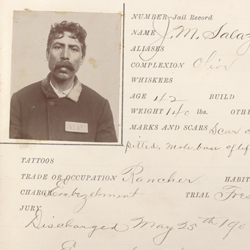
Merced Local History Collection
This collection brings together a variety of resources highlighting the history of the people, places, and events of Merced County.
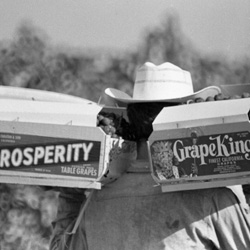
George Ballis Social Change Collection
George Ballis began his career in the Central Valley as an editor of the Valley Labor Citizen newspaper, was mentored by Dorothea Lange and UC Berkeley professor Paul Taylor, and started documenting farm labor and living conditions in the Central Valley in the 1950s. The collection of over 31,000 images includes some of the most iconic images of farm worker organizing efforts by the Agricultural Workers Organizing Committee, the National Farm Workers Association, and the United Farm Workers during the 1960s and 70s.
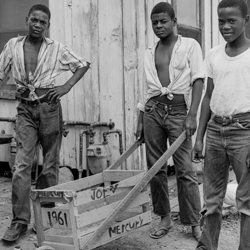
Ernest Lowe Photography Collection
This collection of photographs showcases the work done by photographer Ernest Lowe to document the lives and struggles of the farmworking communities in California's Central Valley. These photographs date from the late 1960s, which featured a series of flashpoints of labor activism among farmworkers in the Valley.
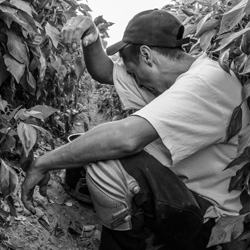
Two Years of Heat and COVID in the San Joaquin Valley, Photographs by David Bacon
The sixty-seven digital photographic prints in this collection by David Bacon document the daily lives of farmworkers and their families during the height of the COVID-19 pandemic, 2020-2022. The photographs were produced as an exhibition highlighting the conditions of farmworkers in the San Joaquin Valley during the heat domes of the period, the conditions of rural housing, and campaigns for immigrant and labor rights.

Wilma Elizabeth McDaniel Papers
Wilma Elizabeth McDaniel was born in 1918 in Stroud, Oklahoma, and moved with her family to the Central Valley of California in 1936 as part of the Dust Bowl migration. She lived in the Central Valley, primarily in Tulare, for the remainder of her life. Known as an “Okie Folk poet,” she is the author of more than 15 collections of poetry and prose, most dealing with aspects of life in the Central Valley. She was the subject of a film documentary by Chris Simon, “Down an Old Road: the Poetic Life of Wilma Elizabeth McDaniel.” She died April 13, 2007.
This collection includes personal and professional correspondence, manuscripts, diaries, photographs, newspaper clippings and audio-visual materials documenting the life and career of Wilma Elizabeth McDaniel. Also included are publications containing poetry by Wilma McDaniel and select publications from her personal library. The audio-visual materials include interviews and scenes of Wilma McDaniel reading her poetry.
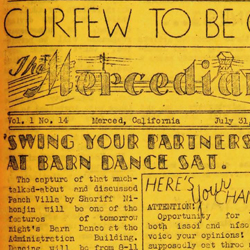
World War II Japanese-American Temporary Detention Center Newsletters
While Executive Order 9066 called for the forced internment of all persons of Japanese ancestry from the West Coast of the United States, there was no existing infrastructure in place for these Japanese-Americans. The eventual detention centers were not yet completed or were not yet in a condition to house the vast numbers of internees who needed shelter. Given this, the United States military established temporary detention centers across California, Arizona and Oregon to act as stop-over locations until the larger detention centers were habitable. There were six such temporary detention centers (otherwise known as “assembly centers”) constructed in the San Joaquin Valley in Fresno, Merced, Pinedale, Stockton, Tulare and Turlock.
This collection features the internee-produced newsletters for the temporary detention centers of Merced, Pinedale, Stockton, Tulare and Turlock.
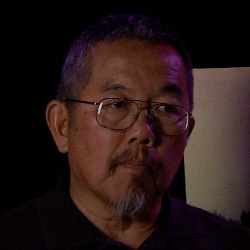
The Merced Assembly Center Documentary Interviews
The interviews in this collection were conducted during the production of the documentary The Merced Assembly Center: Injustice Immortalized. The individuals featured in these interviews provide a range of insights into the history of farming by both Issei and Nisei in the Central Valley, and detail the struggles that they and their families faced in the aftermath of the signing of Executive Order 9066, which spurred the internment of those of Japanese descent along the western coast of the United States in 1942.

Charles G. Holdridge Photographs
This collection contains photographs taken between 1889-1914 by and of Charles G. Holdridge, and document turn of the century Fresno and the surrounding areas. Holdridge managed a lumber mill near Shaver Lake before opening Buckeye General Store in Fresno.
North American Sketches Collection
This collection consists of negatives depicting Yosemite National Park from 1975-1980.
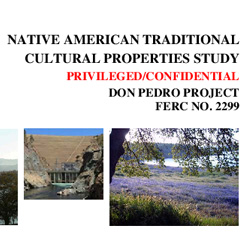
Don Pedro Project
The 168-megawatt Don Pedro Project located on the Tuolumne River, in the Sierra Nevada foothills and the eastern edge of California's Central Valley, provides water storage for the irrigation of over 200,000 acres of farmland, for municipal and industrial use, as well as for retail electric service, among other purposes. The Turlock Irrigation and Modesto Irrigation Districts applied to the Federal Energy Regulatory Commission for relicensing to authorize their continued operation and maintenance of the Don Pedro Project, FERC No. 2299. The objectives, methods, and results of a Native American Traditional Cultural Properties Study (CR-02), implemented by the Districts as part of the relicensing process, are described in a report made available to the public.

McLean Collection
In 1849, Hosea Dudley, ancestor of Walter Doyle McLean, sailed around Cape Hope in his journey from Boston to San Francisco. He later settled in the Coulterville area near what is now Yosemite National Park. Dudley Ranch became a stagecoach stop for travelers visiting the Yosemite Valley and surrounding region. The family collection includes a register of guests with the signatures of John Muir and Thomas Edison; journals; Miwok Indian baskets; mining nuggets; and other Gold Rush era artifacts.
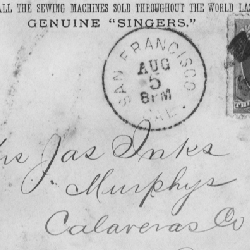
Angels Camp Museum
In 2010, UC Merced undergraduate student Kyle Shipley undertook a project to digitize and curate a small collection of items from the Angels Camp Museum for his "History 190: Applied Research" internship under Professor Gregg Herken.
This collection contains multiple personal correspondences and other materials for the Inks family of Calaveras County between the years 1869 and 1889. Letters contain personal sentiment and hopes for the family, most notably James Inks and his close family.