Skip to content Skip to navigation

Exhibit

Photography Exhibit “De Mis Manos a Su Mesa” Recognizes the Hands that Harvest

Wed, September 10, 2025 3:25 PM

Nancy Burke, Professor of Public Health at UC Merced and Claudia Corchado, the Deputy Executive Director of Cultiva Central Valley, have collaborated to mount an exhibit showcasing the images and stories of 12 Mexican American farmworkers who have worked and lived in the Central Valley.

“A quiet act of recognition,” the photography project presents the intimacy of farm labor and recognizes the dignity of the immigrant and undocumented workers who harvest the food grown in the Valley.

The project came about due to the experience of over two dozen farmworkers who have struggled to maintain employment in hazardous working conditions and are pushed out of work with limited or no access to healthcare. All photos were taken by Claudia Corchado, who captured the embodiment of their sacrifices and hard work.

The exhibit is on display in the Library’s third floor reading room, KL 355.

An opening reception will be held in KL232 on Wednesday, September 17, 4-5:30 PM. Please register.

De Mis Manos a Su Mesa exhibit

Living in Hydroclimatic Extremes: A Visual Journey into Water Research at UC Merced

Mon, September 25, 2023 12:00 AM
Author: 

A new exhibition, curated by Secure Water Future, is on display in the third floor reading room of the Kolligian Library, KL355. Photographs and infographics vividly portray UC Merced's role in shaping a sustainable and resilient water future amid the uncertainties of our changing climate.

As the newest addition to the University of California system, UC Merced has swiftly risen to prominence for its water research. Nestled in the heart of a region grappling with the dual challenges of water scarcity and escalating demands, UC Merced's faculty, students, and staff have dedicated their expertise to essential work that informs water management practices and measurement techniques. Researchers also explore the implications of hydroclimatic whiplash, examine the causes and impacts of groundwater contamination, and promote cross-sector collaboration in the region. These efforts extend beyond innovative research initiatives to include nurturing the next generation of water leaders and amplifying the impact of interdisciplinary team science.

In September 2021, UC Merced received its largest extramural grant to date—an impressive $10 million from the United States Department of Agriculture (USDA). The acquisition of Secure Water Future funding underscores the imperative to make significant strides in addressing agricultural and environmental water needs, with a particular focus on the Central Valley of California. 

The exhibition runs through May 24, 2024.

Exhibition Flyer

Artists Discuss Activism at Opening Reception for Library's Photography Exhibit

Thu, April 27, 2023 3:00 PM

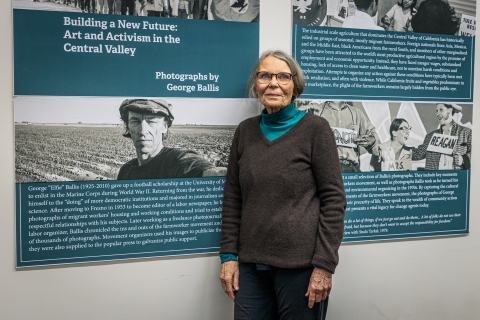
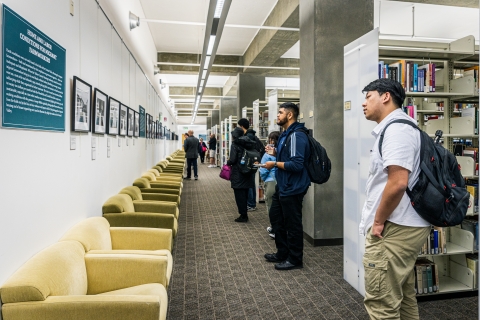
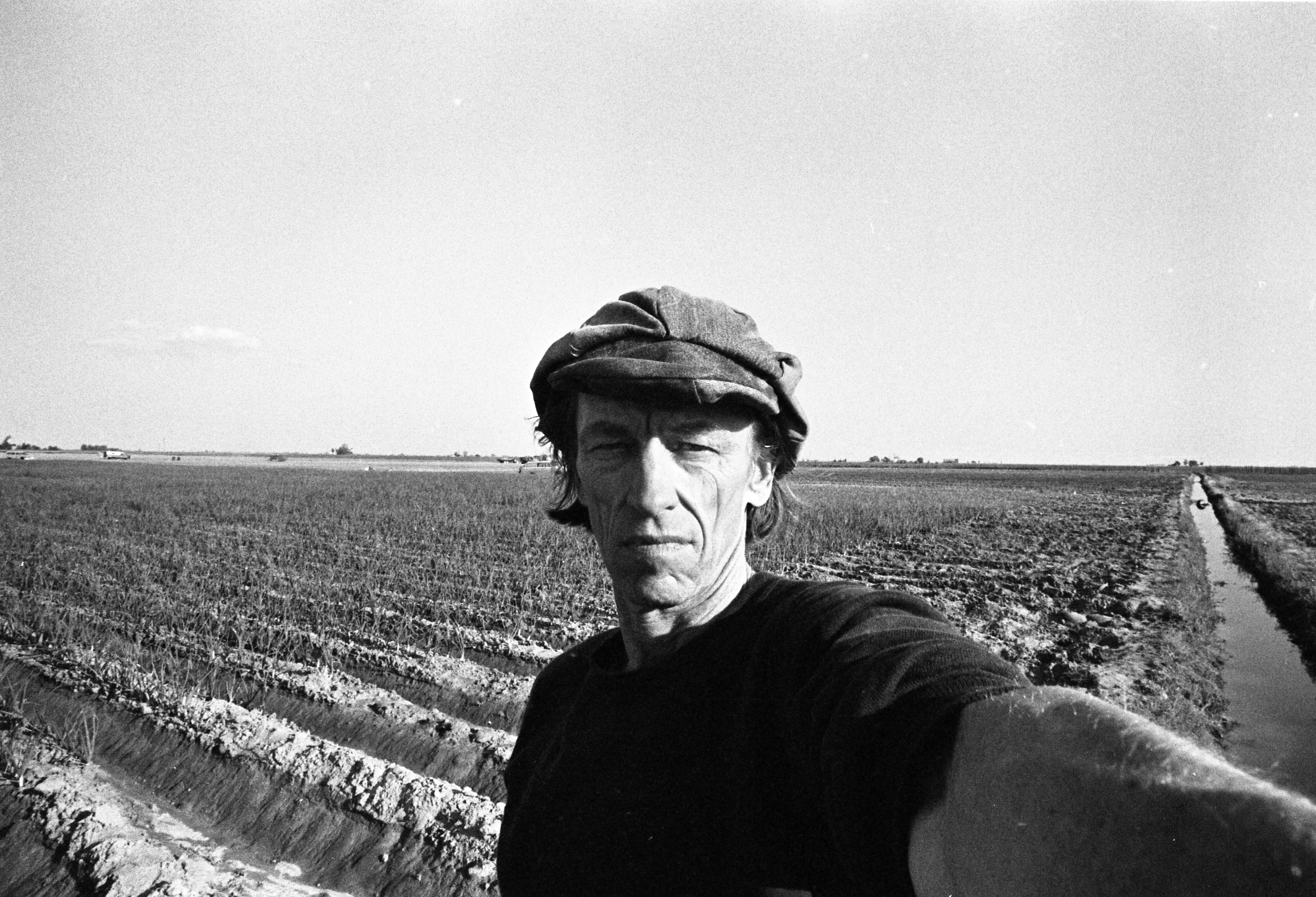
On Thursday, April 13, 2023, the UC Merced Library held an opening reception for the current exhibit, Building a New Future: Art and Activism in the Central Valley—Photographs by George Ballis. Ballis was an activist and photographer who documented the living and working conditions of farm workers beginning in the 1950s, and the development of organized agricultural labor. 

Maia Ballis spoke at the reception and introduced her late husband’s work. “He made it a point to use his time to document what was going on in the fields,” she said, and described how he captured perspectives that may not have been seen otherwise, including images of Maria Moreno, the first woman organizer for the AFL-CIO. Ballis was impressed by Moreno’s strength, and with his photographs aimed to reflect the dignity he saw in each person.

Maia Ballis stands in front of exhibit

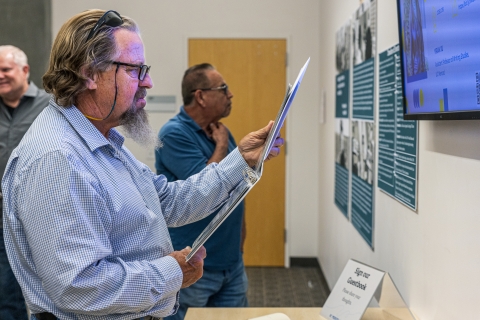
John Ballis looks at contact sheets

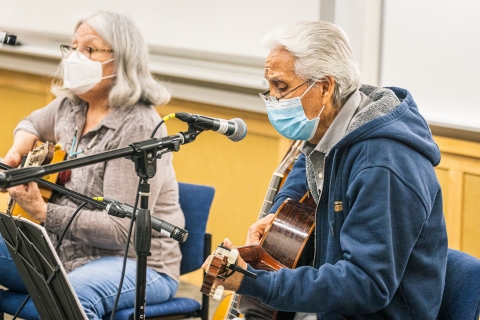
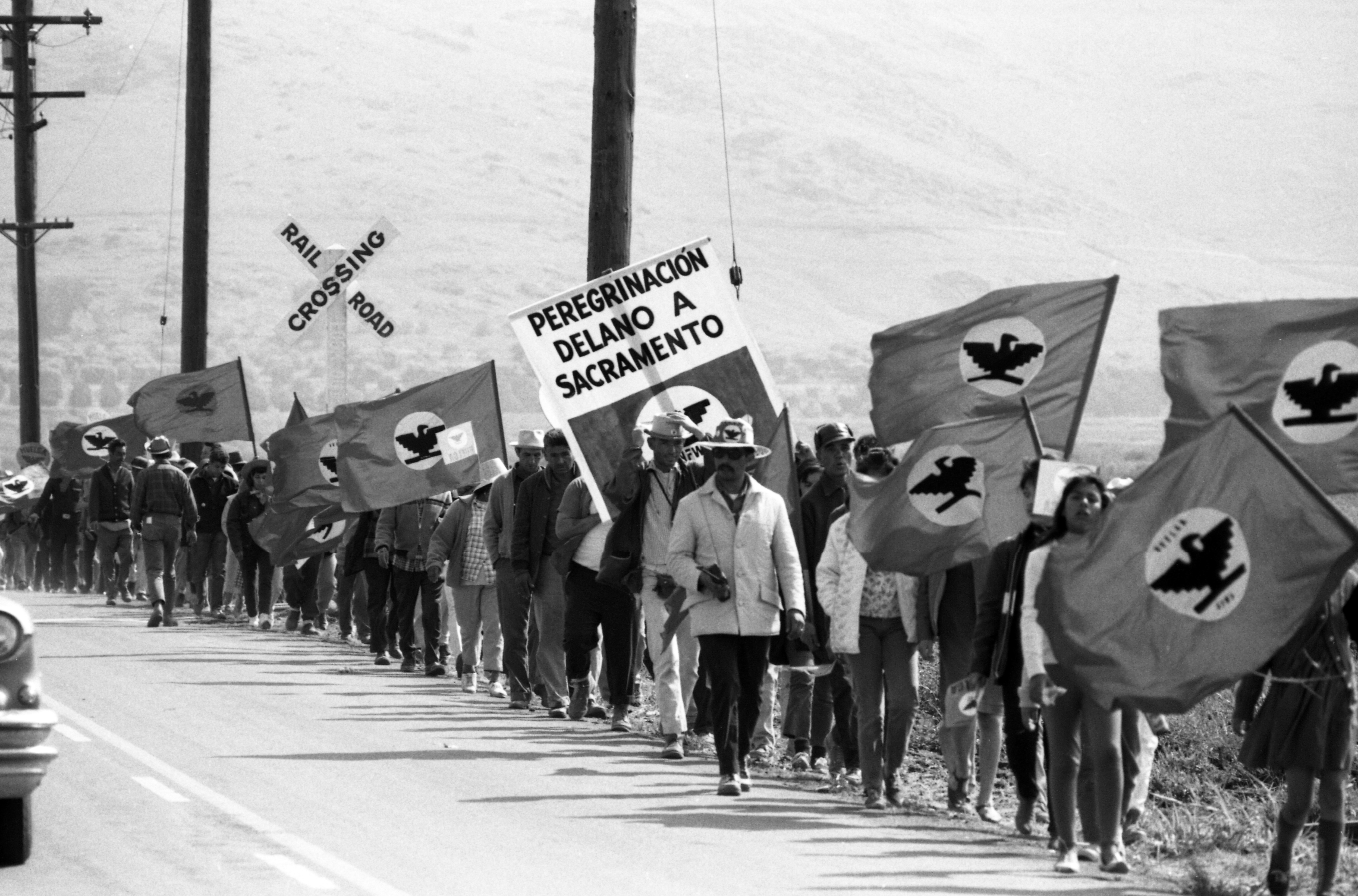
Following the reception, Agustín Lira and Patricia Wells spoke of a similar intent in their music and performed a selection of songs, including “Quihubo Raza,” “When I Die,” and “If You’re Homeless,” which wove in themes of resistance to exploitation and the continued fight for workers' rights. Lira is a singer, songwriter, and director who cofounded El Teatro Campesino with Luis Valdez during the Delano Grape Strike and created songs that inspired and supported the farmworkers' efforts. Wells was active with the United Farm Workers in the 1970s and partnered with Lira to establish El Teatro de la Tierra as well as the musical group Alma. Lira discussed the experience of marching to Sacramento during the Delano Grape Strike and how his song, “La Peregrinación” (The Pilgrimage), expressed the sacrifice as well as the motivation of fellow organizers.

Desde Delano voy hasta Sacramento

Hasta Sacramento

mis derechos a
 pelear.

In a conversation with the audience moderated by Professor Manuel Martín Rodríguez, Lira and Wells asserted the urgency of the ongoing need to challenge dominant narratives in the media and to continue the traditions of protest music.

Agustín Lira and Patricia Wells perform songs

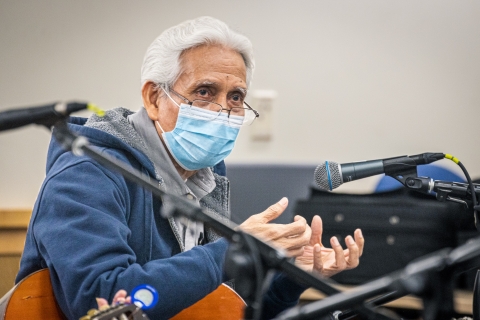
 Agustín Lira discusses his music

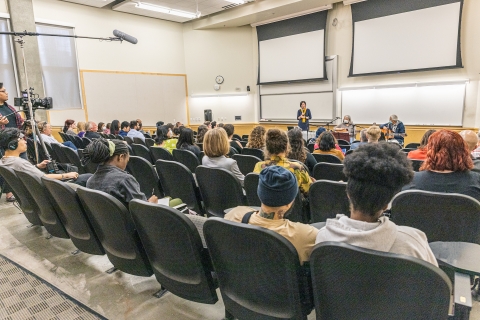
Audience listens to Lira and Wells

Songs of Struggle & Hope by Agustín Lira is available to UC Merced through Smithsonian Global Sound for Libraries, VPN connection required.

Building a New Future: Art and Activism in the Central Valley—Photographs by George Ballis, will be exhibited through July 28th at the Kolligian Library, second floor.

Building a New Future: Art and Activism in the Central Valley -- Photographs by George Ballis

Wed, March 22, 2023 12:00 AM

Building a New Future: Art and Activism in the Central Valley
Photographs by George Ballis
March 22, 2023 - July 28, 2023
Kolligian Library, Second Floor

The industrial scale agriculture that dominates the Central Valley of California has historically relied on groups of seasonal, mostly migrant farmworkers. Foreign nationals from Asia, Mexico, and the Middle East, black Americans from the rural South, and members of other marginalized groups have been attracted to the world’s most productive agricultural region by the promise of employment and economic opportunity. Instead, they have faced meager wages, substandard housing, lack of access to clean water and healthcare, not to mention harsh conditions and exploitation. Attempts to organize any action against these conditions have typically been met with retaliation, and often with violence. While California fruits and vegetables predominate in the marketplace, the plight of the farmworkers remains largely hidden from the public eye.

George “Elfie” Ballis (1925-2010) gave up a football scholarship at the University of Minnesota to enlist in the Marine Corps during World War II. Returning from the war, he dedicated himself to the “doing” of more democratic institutions and majored in journalism and political science. After moving to Fresno in 1953 to become editor of a labor newspaper, he began taking photographs of migrant workers’ housing and working conditions and tried to establish trusting, respectful relationships with his subjects. Later working as a freelance photojournalist and farm labor organizer, Ballis chronicled the ins and outs of the farmworker movement and took tens of thousands of photographs. Movement organizers used his images to publicize the cause, and they were also supplied to the popular press to galvanize public support.

This exhibit presents but a small selection of Ballis’s photographs. They include key moments and figures of the farmworkers movement, as well as photographs Ballis took as he turned his attention to community and environmental organizing in the 1970s. By capturing the cultural and community-based elements of the farmworkers movement, the photographs of George Ballis tell a story beyond their precarity of life. They speak to the wealth of community action and cultural production that presents a vital legacy for change agents today. 

“We got a lot of power. We can do a lot of things, if we just go out and do them... A lot of folks do not use their power not because they are afraid, but because they don’t want to accept the responsibility for freedom.” 

—George Ballis, in an interview with Studs Terkel, 1979.

Valley Life: The Summer Mural Completes the Four Seasons of Yosemite

Fri, November 18, 2022 11:25 AM

Valley Life: The Summer Mural Completes the Four Seasons of Yosemite

Inspired by nature, Artist Bill Poulson first conceived of The Four Seasons of Yosemite in 1986. After closing his stained-glass studio in Maui, he arrived in Yosemite National Park (YNP) that September and embarked on drawing numerous scenes over the course of a few weeks. These drawings informed his finalized sketches for each of the four murals.

That same year, he started the fall mural known as Tissiack, the Ahwahneechee American Indian Tribe's name for Half Dome. He completed this stunning mural in 1988 with Half Dome gleaming in brilliant oranges. Tissiack premiered at YNP's Ahwahnee Hotel in 1989 and was a featured exhibit at the Visitor Center in 1990.

Twenty-years later (2008), Poulson completed the second mural representing Winter -- titled The Chief. The mural of monochromatic colors includes a full moon over snowy terrain with Cathedral Spires on one side of the valley, El Capitan on the other, and a bobcat looking down on showshoe hares. For a time, both the Fall and Winter murals were displayed in Ahwahnee's Great Room, back-to-back, in a large custom lightbox built by Poulson who is also a journeyman carpenter.

To start the Spring mural, Poulson needed to create working space in his Arnold studio as each mural stands 14 feet wide and 8 feet tall. Poulson coordinated with the concessionaire at YNP to rotate the Fall and Winter murals in the Cliff Room at the Yosemite Lodge. Eventually, these required an alternate location, due to change in concessionaires, and UC Merced was identified as a potential host. In spring 2016, the Winter mural moved to the UC Merced Library from the Cliff Room and later that year, the Fall mural followed.

With space to work, Poulson finished the Spring mural in 2019. It features large, vivid dogwood flowers and a creek in riveting white, blues, and greens. This view is visible a half mile beyond the park's first tunnel.

Poulson completed the final mural of this series in 2022. Valley Life represents Summer with a view of Yosemite Valley looking west toward El Capitan (right) and Sentinel Rock (left). Poulson wished to call attention to American Indians and their daily activities before settlers arrived. It features a brilliant blue sky and the sweeping height of granite faces so deeply associated with the park. The Summer mural completes the four seasons, and all are on display at UC Merced's Library on the 3rd floor. The UC Merced Library is pleased to host these beautifully crafted murals.

For each mural, Poulson transformed a 12x18 inch pencil sketch into a water color, sometimes painting multiple water colors before confirming the final image. He magnified each water color, using a projector, to trace the top and bottom of each panel (each mural consists of seven 2x8 foot panels) onto manila paper. To create the stained-glass, he employed both leaded and copper foiling techniques. The leaded process involves cutting strips of lead into desired lengths and moving from one corner to another, placing glass as you go. Copper foiling allows for a thinner lead line and greater flexibility as glass is wrapped with copper tape.

Poulson was first introduced to stained glass by an artist and good friend while working as a carpenter at a cabinet shop in Sutter, CA. He read a book about working with stained glass and initially started cutting clear glass as part of the learning process. His love of drawing formed the basis of his own designs. His first stained-glass window projects, displayed at a local gift shop, sold quickly which inspired him to start his stained-glass business in Hawaii (1978). It was here that he created a stained glass dome, 12 feet in diameter, to place on top of his first glass studio; he took a welding class in order to build the framework himself.

The W. Poulson studio is located in Arnold, CA where he crafts commissioned projects of stained glass and custom furniture.

http://poulsonglassstudio.com

►Watch the ABC30 News story featuring the UC Merced Library and the Four Seasons of Yosemite murals (Facebook)
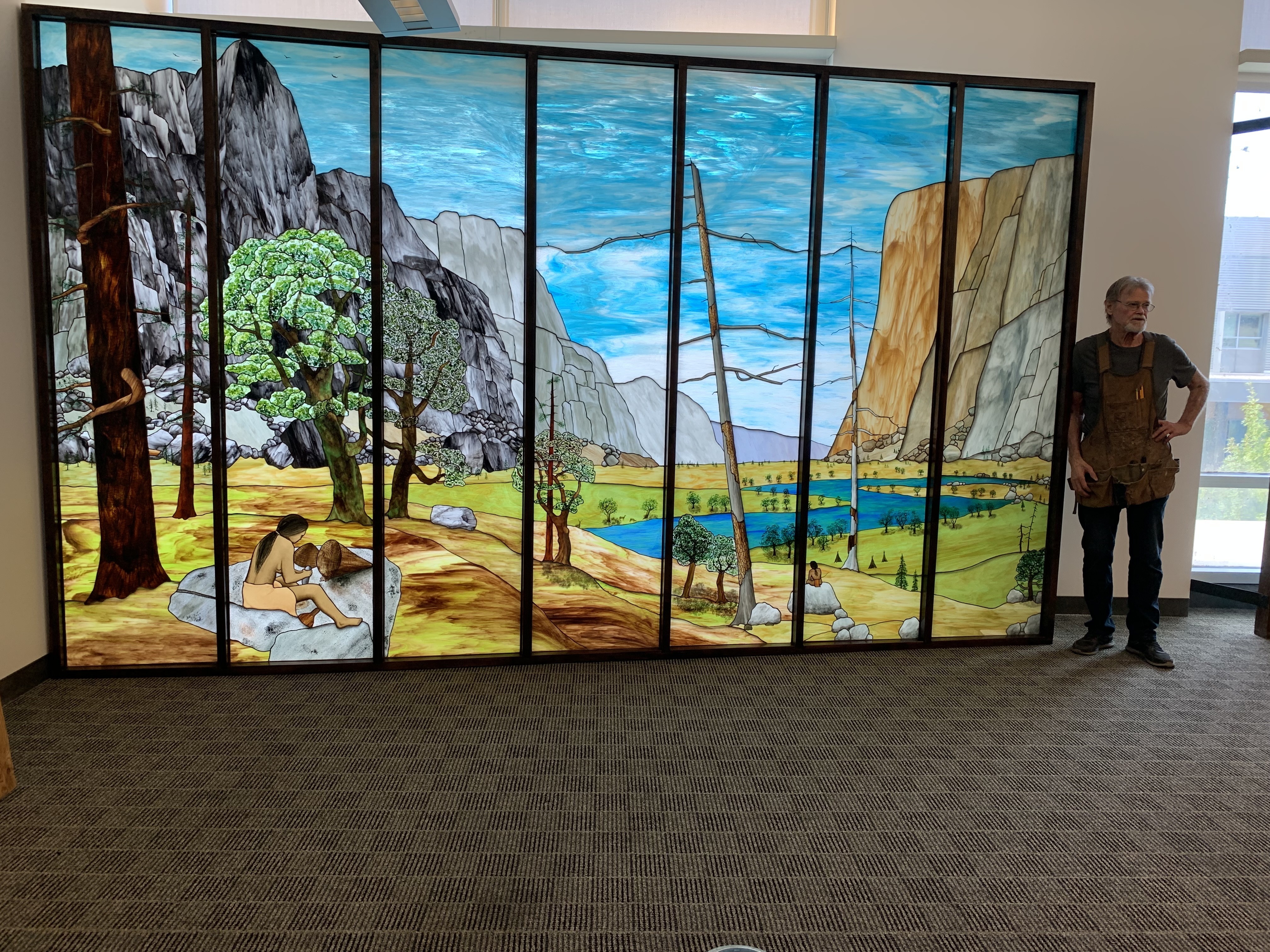
 

Valley Life, Summer mural completing the Four Seasons of Yosemite Murals

Four Seasons of Yosemite Murals (Summer, Fall, Winter, Spring), UC Merced Library's 3rd Floor

 

A Century of Impact in California's Counties: Highlights from the University of California Cooperative archive

Mon, September 26, 2022 12:05 PM

A new photography exhibit has opened on the 4th floor of the UC Merced Library. A Century of Impact in California's Counties: Highlights from the University of California Cooperative archive features photographs from the California Agricultural Resources Archive (CARA), showcasing the University of California’s work over the past 100 years to improve agricultural practices, support youth development, and promote broader civic engagement. The exhibit is divided into five themes: farm advisor demonstrations, crop trials, labor, home demonstration agents, and 4-H. Photographs illustrate the scope of work conducted by UC Cooperative Extension advisors. In the early years, farm advisors sought to create irrigation districts and fire protection districts; to direct road and infrastructure campaigns; and to demonstrate new techniques and technologies in agricultural production. In the ensuing decades, Cooperative Extension has administered extensive crop trials and has conducted copious research into farming practices and technologies. The first home demonstration agents in California taught rural women and girls about nutrition, food preservation techniques, and home economic skills like sewing and dressmaking. The involvement of youth in Cooperative Extension work was a precursor to the formation of 4-H clubs. Some of the images underscore major socioeconomic issues present in rural California like labor and immigration, irrevocably linked to farming and agriculture. A Century of Impact in California's Counties highlights only a selection of the items documenting the history of UC Cooperative Extension and how it has influenced agriculture and rural life in California, which the UC Merced Library has archived.  

A Century of Impact in California's Counties:  
Highlights from the University of California Cooperative archive 
September 22, 2022 – May 13, 2023 
Kolligian Library, 4th Floor 
For more information about CARA:  
cara.ucmerced.edu 


This exhibit was made possible with support from the National Endowment for the Humanities: Democracy demands wisdom. Any views, findings, conclusions, or recommendations expressed in this program do not necessarily represent those of the National Endowment for the Humanities. A Major Initiatives grant from the National Historical Publications & Records Commission supported the development and digitization of the UC Cooperative Extension Archive. 


40 Years of AIDS: "They Were Really Us" exhibit on display through December 2021

Wed, November 10, 2021 12:00 AM

"They Were Really Us" exhibit at Kolligian Library

"They Were Really Us": The UCSF Community’s Early Response to AIDS at the UC Merced Library chronicles 40 years of the AIDS crisis in photos, essays, and research materials. The exhibit title is based on a statement made by Dr. Paul Volberding in the documentary, Life Before the Lifeboat: San Francisco’s Courageous Response to the AIDS Outbreak:

The patients were exactly our age… all those other ways that we tend to separate ourselves meant very little when you realize that the patients had gone to the same schools, they listened to the same music, they went to the same restaurants. So they were really us… which added to the commitment that I think all of us had.

Drawing from the AIDS History Project collections preserved in UCSF’s Archives and Special Collections, “They Were Really Us" sheds light on how UCSF clinicians and staff addressed HIV/AIDS from its outbreak in the 1980s to the foundation of the AIDS Research Institute in 1996. "They Were Really Us" exhibit at Kolligian Library

The exhibit could hardly be more timely now--parallels between the HIV/AIDS epidemic and the COVID-19 pandemic are striking, from the medical professionals who were at the forefront of defining what was at first a mysterious disease, to the community organizations combating associated stigma and misinformation, to public campaigns preventing transmission by promoting practices like condom-wearing. "They Were Really Us" is an inspiring display documenting the medical successes and advances in activism that continue to impact the world today. 

A recently aired podcast from Berkeley Remix, "First Response: AIDS and Community in San Francisco," is an audio complement to “They are Really Us.” This six series-podcast, produced by The Oral History Center at UC Berkeley, is about the politics of the first encounters with the AIDS epidemic in San Francisco. It draws from thirty-five interviews conducted in the 1990s with Sally Smith Hughes, historian of science at the Bancroft Library and author of The Virus: A History of the Concept. The featured interviews focus on the early years of epidemic, when the first reports emerged of an unknown disease that was killing gay men in San Francisco, to 1984 and the development of a new way of caring for people in a hospital setting.

With funding from @NEHgov, we partnered with UCSF Library, The GLBT Historical Society & San Francisco Public Library to make 160,197 pages of AIDS history documenting the early days of the epidemic available online. In concluding the project, "They Were Really Us" was originally installed at UC Merced Library for an opening in Spring 2020, but ironically, the COVID-19 pandemic led to the library's closure. A digital version of "They Were Really Us" was published on Calisphere in July 2020. We are continuing to digitize AIDS collections from UCSF with support from Network of the National Library of Medicine - Pacific Southwest Region

See "They Were Really Us" at UC Merced Kolligian Library through December 2021.

Ernest Lowe: Black Migrants to the Central Valley, 1960-1964

Wed, January 9, 2019 2:00 PM

Immediately following World War II, more than 30,000 Black sharecroppers migrated to California's Central Valley. Coming from places like Oklahoma, Texas, Arkansas, and Mississippi, these migrants looked to escape the oppression of new-slavery tenant farming and the Jim Crow south. These migrants established their communities in the shadows of the giant farms of the Central Valley, but soon found themselves without work as industrial agriculture took root, and mechanization further decimated the number of available jobs. Some migrants migrated again to the coastal cities in search of new opportunities, but others remained. In the early 1960s, photographer Ernest Lowe visited the Central Valley towns of Pixley and Dos Palos. The photographs showcased in this exhibition are a record of that visit--showcasing communities of single-walled houses with little to no electricity, no roads, no infrastructure. They tell the remarkable story of those who ventured west in search of a dream, and who were forced to simply survive, and keep dreaming, in the face of poverty, racism, and the broken promise of California.

The exhibit will be on display from January 22 through April 5, 2019.

Exhibit reception

Date: Friday, February 1
Time: 4:30-6:30 p.m.
Location: 3rd floor of the Kolligian Library, 355

Refreshments will be provided.

An original exhibit of the Fresno Art Museum. Sponsored by the UC Merced Library, Arts UC Merced Presents, and the UC Merced Center for the Humanities.

This project was made possible with support from California Humanities, a non-profit partner of the National Endowment for the Humanities. Visit www.calhum.org.

Curator Talk: Hydraulic Landscapes

Fri, April 7, 2017 12:00 AM

Immerse Yourself in California Water History and join Rina Faletti, UC Merced Center for the Humanities Postdoctoral for a talk and tour of her exhibit, Hydraulic Landscapes: Water History and Industrial Photography in California. From 19th-century construction of local Merced canals and Lake Yosemite near campus, to massive concrete works of the Central Valley Project's Delta-Mendota Canal, see how mid-20th-centuy water engineering created a world-famous hydraulic landscape in striking historic photographs from Central Valley archives.

Friday, April 7th

1:00pm to 2:00pm

KL362

Yosemite Mural Display

Tue, August 16, 2016 12:00 AM

The library is pleased to announce the installation of a second stained glass mural by artist William Poulson. The mural, Tissiack, is a stunning depiction of Yosemite in fall, featuring a view of Half Dome during sunset. The murals are part of William Poulson's Yosemite Mural Project, which aims to showcase Yosemite in each season. Tissiack joins Poulson's winter mural, The Chief, on the 3rd floor of the Library by room KL371. Both murals stand over 8' wide, by 14' tall. 

For more information about William Poulson and the Yosemite Mural Project, visit www.williampoulson.com


Pages

Subscribe to Exhibit