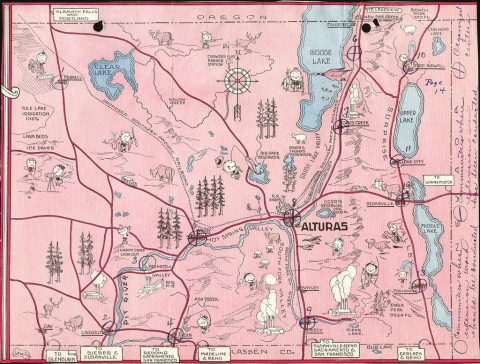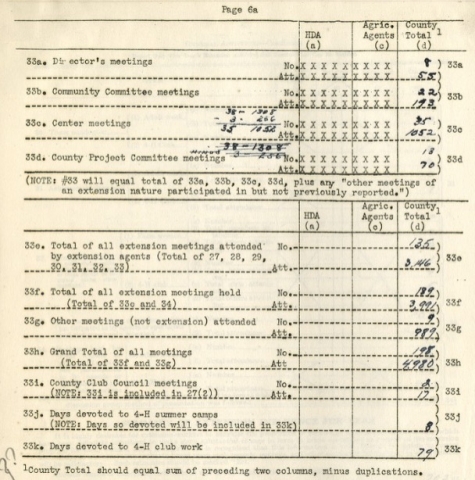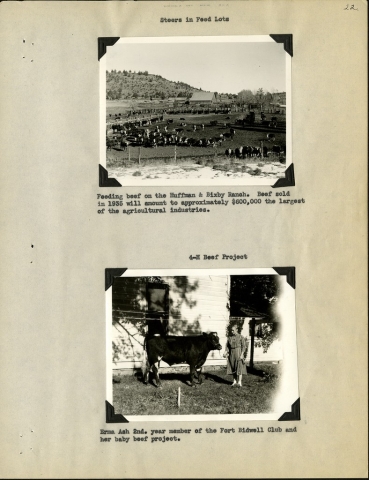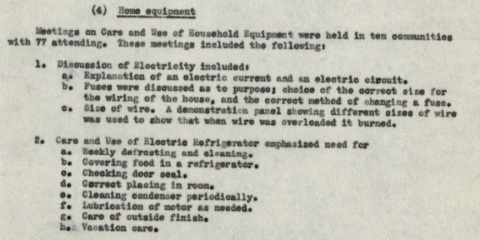
History of UC Cooperative Extension in Modoc County now online


On Sunday, October 17th from midnight to 1am Pacific Time, ExLibris will be performing systems maintenance which may cause an interruption in online catalog services. We apologize for any inconvenience and hope this interruption will create minimal disruption to our users’ research.

On Sunday, October 10th from midnight to 1am Pacific Time, ExLibris will be performing systems maintenance which may cause an interruption in online catalog services. We apologize for any inconvenience and hope this interruption will create minimal disruption to our users’ research.

On October 3rd from midnight to 1am Pacific Time, ExLibris will be performing systems maintenance which may cause an interruption in online catalog services. We apologize for any inconvenience and hope this interruption will create minimal disruption to our users’ research.

Join the UC Merced Center for the Humanities and other UC campuses in an initiative to raise financial support for threatened academics and artists. The Scholars at Risk Fund (SAR) will help support scholars fleeing crisis in the world, like in Afghanistan. The campaign will run through October 29th with a goal of raising $40,000 which will match funds committed by the UC Merced Provost's Office. Read the full article in the UC Merced Newsroom.
If you can help, please visit the Scholars at Risk page.

Note: Some of our workshops will be in-person, while most remain online via Zoom. Double-check the event location for each event prior to registering. Zoom links and passcodes will be provided with registration confirmation.
You can also view previously recorded workshops, on-demand.
Since our last post on the University of California Agriculture and Natural Resources (UCANR) Archive, we have continued to process audiovisual objects found in the collection. Most recently, the library has made 154 audio clips accessible for listening through Calisphere. These recordings came into the archive stored on CD-Rs (compact disks), but since this format is obsolete and equipment to play CD-Rs is no longer prevalent, they were converted to digital audio files. In addition to making the clips accessible, the digital files are preserved for the long term in a sustainable format in the California Digital Library’s digital preservation repository.
The CD-Rs are dated from 2003 and contain recordings of radio broadcasts produced and narrated by Robert Singleton, the UCANR radio broadcaster (who retired under the title Senior Public Information Officer) from 1985-2003. During his long tenure, Singleton interviewed UCCE farm and home advisors, researchers, and other employees about certain topics related to their work. Essentially, Singleton used radio communication to disseminate UCANR’s research and programs to communities around the state as each story he recorded was sent to local stations. (december-2003) The addition of these audio clips to the University of California Division of Agriculture and Natural Resources, UC Cooperative Extension Records enables a deeper understanding of the breadth of work undertaken by UCCE offices around California and demonstrates the ways information made its way to the public at the end of the twentieth century.
An ANR Report article about the UC Cooperative Extension Radio Feed from February 2000 explains that “half are stories of consumer interest, covering such topics as home gardening, financial management, nutrition and environmental issues. The other half focuses on agricultural issues, primarily research developments and public policy.” While Singleton led the production of his own stories, ANR researchers were also encouraged to submit topic ideas related to their own research fields. (january-1-february-7-2000) The range of UCANR extension work is evident in these audio clips, though they are only a fraction of the stories distributed by Singleton and ANR Broadcast Services, and of the work of ANR overall.
On Calisphere, the audio files are arranged alphabetically by topic, revealing some general themes. Many of the radio spots cover financial programs and literacy and warn listeners of unwarranted issues such as predatory lending and homeownership scams, the risks of adjustable-rate mortgages, and information about online banking and earned income credit programs that educate listeners on their benefits and risks. There are also audio clips concerning environmental issues. One spot details fire prevention of homes and buildings and highlights actions that people can take to prevent the loss of their homes. Another set of clips deal with the various risks associated with farm labor. Heat stress among farmworkers, for example, is described by a University of California farm safety representative who explains how to identify and prevent the dangerous effects of excessive sun exposure. Harvest related injuries in older workers, night work injuries, and technology use by workers are also covered by Singleton in his news stories, along with a plethora of other topics such as pesticides, information about crops like rice and purple carrots, and diseases such as the West Nile virus.

University of California Agricultural Cooperative Extension, San Joaquin County Collection
UC Merced, UC Cooperative Extension Archive
San Joaquin County Historical Society and Museum
Listen to all the ANR Broadcast Services radio feed clips on Calisphere here!

Please join us for an author talk featuring Merritt Writing Program lecturer Justin Gautreau, who will discuss his recent book, The Last Word: The Hollywood Novel and the Studio System. The Last Word discusses Hollywood culture critique - in particular the fiction written by industry insiders to share what was considered unfilmable. While a unique perspective in the 1920s and 1930s, the Hollywood novel's relevance gradually declined in the years after. That said, the books remain a fascinating window into Hollywood and the public imagination.
Event Date: Thursday, October 14, 2021
Event Time: 2 PM - 3 PM
Event Location: Zoom (link and passcode provided with registration)
Audience: All are welcome!
Beginning Saturday, August 21st at 5am Pacific Time, the BioOne Complete platform will undergo a system upgrade. Database content, personal library features, and resource pages will not be available until access is restored on Sunday, August 22nd. We apologize for any inconvenience and hope this interruption will create minimal disruption to our users’ research.

The UC Merced Library will reopen its doors on August 16th, 2021 after an 18-month closure due to the Covid-19 pandemic. In light of being physically, closed, the UC Merced Library continued to provide services and resources, grow its archival collections, and upgrade to UC Library Search- a shared UC-wide library catalog. Read the UC Merced Newsroom article by Juan Flores, UC Merced Public Information Officer and UC Merced Alumnus, class of 2009. The full article is also posted below.

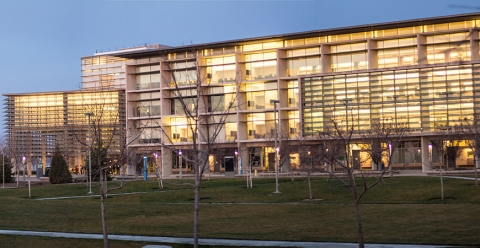
The UC Merced Library will reopen on Monday, Aug. 16. Photo by Veronica Adrover.
Since opening its doors in August 2005, the UC Merced Library has served as the hub of the campus. That all changed when the coronavirus pandemic hit and the building was forced to close in March 2020. Now, the library is gearing up to reopen its doors on Aug. 16 and welcome back members of the university and community.
As has been the case since UC Merced opened, adapting to fluid and ever-changing situations on campus is a must. From using fire exits to access buildings to having lectures in the California Room, Bobcats have quickly learned to roll with the punches. That was certainly the case when the pandemic started, and the library shifted to an entirely digital operation.
"I think one of the reasons we were able to move to this remote and digital model so easily is we've always been very adaptable," said Eric Scott, associate university librarian for library operations. "That's always been our mentality. That's always been our organizational attitude."

The UC Merced Library has had its doors closed to visitors for 18 months. Photo by Veronica Adrover.
The library building was closed to visitors for 18 months, books couldn't be handled after being returned, and the courier service between the UCs was shut down for some time. Still, staff members were working from home and behind the scenes to ensure services such as curbside pickup, as well as residential delivery for faculty and graduate students, were available.
"Our goal at the library really was to be able to provide as stable of a service as we could," said Ross Anastos, library services manager. "The dedication, hard work and motivation of every single person on staff, including the student assistants, is the only way that what we did was possible."
"Throughout the pandemic, we've tried really hard to the extent that we could to get materials for people," said Joe Ameen, head of access services. "We tried to make as many of our resources available in electronic formats as we could."
The library already had a large amount of information resources in digital form before the pandemic. Moreover, Hathi Trust, a consortium that digitizes library materials held at universities across the United States, provided Emergency Temporary Access Service to the UC's copyrighted materials for online viewing, Ameen said.
Library goes above and beyond
Amid the pandemic, the library also became a haven for some irreplaceable archives. In September 2020, the Castle Fire burned toward Sequoia and Kings Canyon National Parks' headquarters. At the time, the archives there contained documents related to the 130-year history of Sequoia and its founding, photographs and negatives, plant samples of every known species and much more.
The archives' curator at the parks contacted the library for help. Within days, work got underway to transport the archives to the library for safekeeping.
New way to search unveiled
Even during the pandemic, the library's tools have been evolving. A new way to search for information resources at UC Merced and across the UC system, UC Library Search, officially went online July 27. At UC Merced, it replaces Melvyl, and it's now also the sole system used to manage and access collections across all 10 campuses, the California Digital Library and two regional storage facilities.
UC Library Search is much more than a sleeker-looking system. The catalog's goal is to make searching for information resources more efficient and streamlined while avoiding duplicate entries and results.
"We can create improvements in how the searches work so we can institute them across the whole system, so it's going to give better searches for end-users as time goes on," said Donald Barclay, deputy university librarian. "End-users are going to find more flexibility and more ability to be specific."
Library staff members will also benefit from the new catalog. They will have a greater ability to analyze how collections are used, helping to make decisions about which information resources may need to be purchased in the future. Furthermore, the UC system reports that the shared system costs 40% less than 10 campuses carrying out infrastructure improvements separately.

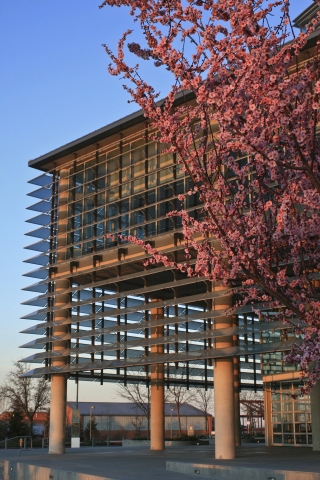
The UC Merced Library has been the hub of the campus since it opened in 2005. Photo by Veronica Adrover.
The initial discussions for the new systemwide Integrated Library System (ILS) got underway back in 2017, and implementation was carried out by members from all 10 UC campuses during the pandemic. It was no easy task. Staff transferred more than 100 million records from the old systems to UC Library Search.
"This was a big project, and several hundred people worked on it to varying degrees. A lot of people at UC Merced worked really hard on it, including Tom Bustos, the library's director of library technology," said Barclay, who was on the committee overseeing the project.
While library staff reiterate that the new search system is simple to use, students, faculty, staff and community members may still have questions. Barclay said instructional materials and resources are being developed. In the meantime, anyone with questions is encouraged to use the "Ask A Librarian" feature on the library's website; the chat service is available 24/7. Questions can also be asked via phone, email and Zoom videoconferencing.
Patience is a virtue
Returning to campus is exciting but could prove to be stressful as well, especially after having attended classes virtually for more than a year. Library staff are asking for patience as the university community reunites in person. About 25 student assistants made up library services, but that number went down to five once the library closed. Now, some 20 new student workers are being trained on the new system, but they, along with the rest of the library staff, are available to help and answer any questions.
Scott said staff members will wear facial coverings and follow the UC's directives on COVID-19 protocols. Visitors will notice that collaborative workrooms are closed, but that's because they are being renovated.
The UC Merced Library will be open on a modified schedule starting Aug. 16, and its hours will expand on Aug. 25.
Fall semester hours:
Aug. 16–24
Monday to Friday: 9 a.m. – 3 p.m.
Weekend: Closed
Lantern, first floor: open 24/7
Aug. 25–Dec. 17
Sunday: noon – 8 p.m.
Monday: 7 a.m. – midnight
Tuesday: 7 a.m. – midnight
Wednesday: 7 a.m. – midnight
Thursday: 7 a.m. – midnight
Friday: 7 a.m. – 6 p.m.
Saturday: closed
Lantern, first floor: open 24/7
Exceptions
Monday, Sept. 6: closed in observance of Labor Day
Thursday, Nov. 11: closed in observance of Veterans Day
Wednesday, Nov. 24: open 8 a.m. – 3 p.m.
Thursday, Nov. 25 and Friday, Nov. 26: closed in observance of Thanksgiving Day
For more information about hours of operation and services, visit the library's website.