Skip to content Skip to navigation

Library News

UC Merced Library Acquires George Ballis Photography Collection

Fri, September 2, 2022 3:00 PM
Author: 

As we prepare to celebrate the Labor Day holiday, we are pleased to announce that the UC Merced Library has acquired a major photography collection, the work of George Mark “Elfie” Ballis. George Ballis began his career in the Central Valley as an editor of the Valley Labor Citizen newspaper, was mentored by Dorothea Lange and UC Berkeley professor Paul Taylor, and started documenting farm labor and living conditions in the Central Valley in the 1950s.

The collection of over 31,000 images, acquired with funding from the Office of the Chancellor, includes some of the most iconic images of farm worker organizing efforts by the Agricultural Workers Organizing Committee, the National Farm Workers Association, and the United Farm Workers during the 1960s and 70s. Historian George Patrick Fontes calls Ballis a “master photographer” who “created images that are now windows, time machines, into a tumultuous time in American history, in California history, in Mexican American and Chicano history.” Ballis was both an active organizer and documentarian of anti-poverty programs and efforts to support small farmers and farm worker co-op farms. The collection includes photographs of Black co-op farms in Lanare and Pixley and Self-Help Housing projects in Tulare and Fresno counties.

Archived at the library alongside the photographs of Ernest Lowe, they will offer students and researchers a detailed and extensive visual record of the struggle for environmental and social justice in the region—the organized movements to improve everyday working and living conditions in the world’s most productive agricultural region. The Library is working with the Center for the Humanities to plan an exhibit of the collection in the spring of 2023. Digitized images from the collection will be made accessible to the public on the California Digital Library’s Calisphere site.

The Library is partnering with the Center for the Humanities to develop a Sierra Nevada-Central Valley research archives and thanks our colleagues at the Center for their support with this acquisition.

Migrant girl, Three Rocks, CaliforniaMigrant girl, Three Rocks, California.
Photograph by George Ballis © 2020 TakeStock / TopFoto.

Maria Moreno and migrant laborers in the field. Photography by George Ballis. Maria Moreno and migrant laborers in the field.
Photograph by George Ballis © 2020 TakeStock / TopFoto.

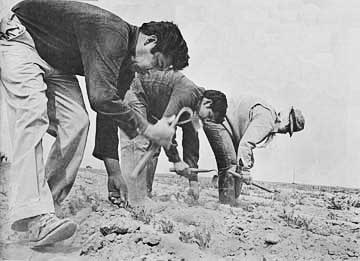
Workers using the short-handled hoe. Photograph by George Ballis. Workers using the short-handled hoe.
Photograph by George Ballis © 2020 TakeStock / TopFoto.

Farm workers march north of Merced, AWOC & NFWA march from Delano to Sacramento. Photography by George Ballis.  Marchers north of Merced, en route to Sacramento.
Photograph by George Ballis © 2020 TakeStock / TopFoto.


Take the Library Tour!

Tue, August 22, 2023 2:50 PM

Join Rufus! New Library Tour

The Library is hosting a Library Tour, designed to introduce students to Library spaces and familiarize them with our services and resources. The Tour must be completed in person, and asks students to walk through the Library answering questions and taking photos of a cardboard cutout of Rufus that they can pick up at the Services Desk. Students who complete the tour will be eligible for a chance to win a giftcard!

This is an in-person Tour students will complete on their cell phones, though there is a paper version available. 

By the end of the Tour, student will be able to:

  • Find the following Library spaces: the Library Services Desk; The McFadden-Willis Reading Room; KL 355; Collaborative Work Rooms; the Pods; and KL 371. 
  • Use their CatCard to check out materials
  • Understand ways the Library catalog can be used, including:
    • conducting simple searches using at least one keyword;
    • access materials and use ILL

Questions? Contact library@ucmerced.edu or emcmunn@ucmerced.edu for more information. 


Sara Davidson Squibb Takes on New Role as Associate University Librarian (AUL) for Research & Engagement

Mon, August 8, 2022 3:05 PM


Sara Davidson Squibb Takes on New Role as Associate University Librarian (AUL) for Research & Engagement 

Photo Provided by Sara Davidson Squibb

Published: August 8, 2022

Sara Davidson Squibb joined the library staff in the summer of 2005 just prior to the university accepting its first undergraduate class. In those initial years, as an Instruction Librarian, she worked closely with faculty to support student learning by providing library instruction that equipped students with strategies for navigating the library’s rich resources and critically using information. Over the course of her 17-year career at the UC Merced Library, Davidson Squibb has continued to take initiative, build library instructional programs, lead outreach events, partner with campus organizations and serve on advisory boards. Davidson Squibb is known for her collaborative spirit, innovative ideas, and thoughtful, friendly presence on campus. In 2017, she became the Library’s Head of Research & Learning Services, mentoring librarians and staff, developing new ideas around student learning, and assessing the value of library instruction on academic outcomes. 

Following a nationwide search, Sara Davidson Squibb accepted the role of Associate University Librarian for Research & Engagement (AUL) and started July 1, 2022. In this position, Davidson Squibb will provide leadership and vision for the library, with a big-picture view of how the library can grow with the UC Merced campus as a whole, and adopt innovative, inclusive, and relevant services for the entire campus community. She will also be involved in initiatives at the systemwide UC Libraries level.

“I am excited to take on this new endeavor with my colleagues who are committed to our students, faculty, and the university’s mission. With this expanded portfolio, I am looking forward to more broadly promoting and providing library services and resources that make tangible contributions to our faculty and students. I am especially interested in sharing our expertise, fostering students’ sense of belonging to the academy, and expanding access to resources that represent our region.”

As AUL, Davidson Squibb will provide oversight to the following library units: 

  • Research & Learning Services
  • Collections Services
  • Digital Curation and Scholarship
  • GIS Services
  • Data Services

Please join us in congratulating Sara Davidson Squibb on her influential career with the UC Merced Library and in anticipation of her future accomplishments as the Associate University Librarian of Research & Engagement!


Request Course Resources for Spring 2023 Courses

Wed, December 7, 2022 2:05 PM

Request Course Resources for Spring 2023 Courses

Do you need to make supplemental course materials available to your students?

Course resources is a service offered by the Library to make course-related materials available to your students. The Course Resources service includes locating and digitizing materials and then posting the materials to CatCourses. Electronic materials are made available to your students through the Course Resources tool in CatCourses, while print materials are made available at the Library for a 2-hour loan period.


Would you like to make video materials available to your students?

The Library offers digitization services for AV materials including eligible DVDs. Video content digitized by the Library is made available in CatCourses through the Kaltura Canvas tool.


► Requests can be submitted at any time and will be processed in the order they are received. For more information about Course Resources and how to submit a request see our guide.


Request Library Instruction for Fall 2022 Courses

Tue, August 2, 2022 11:55 AM

UC Merced librarians offer instruction sessions to support undergraduate and graduate students in their completion of course assignments requiring library research skills.

Please submit fall 2022 requests via our online instruction request form. Requests received by Thursday, August 18th will receive scheduling priority. We are also happy to consult prior to your instruction request regarding desired outcomes.

Visit Library Instruction Services landing page for more resources including

We look forward to working with you to increase students’ ability to strategically navigate, critically evaluate, and ethically use information.

Email us with any questions library@ucmerced.edu, or contact your library liaison.

Photo

Announcing Three New Open Access Publishing Agreements

Mon, August 1, 2022 10:45 AM

The UC Libraries are pleased to announce three new open access publishing agreements. The first supports open access publishing with the technical professional organization IEEE, which is among the largest publishers of UC research. The second is an extension of UC’s 2020 agreement with Springer Nature that adds funding support for open access publishing in the prestigious Nature journals; previously only titles in the Springer portfolio were eligible. The third agreement is with SAGE Publishing, one of the largest publishers of UC research in the social sciences and humanities. For more information about these open access agreements, as well as other agreements scholarly publishers, please visit the UC Office of Scholarly Communications Press Room.

Problem Solving in San Joaquin County: early twentieth century UC Cooperative Extension projects

Wed, July 27, 2022 10:25 AM

Previously, we have shared digitized items from the University of California Agricultural Cooperative Extension, San Joaquin County collection that represent the significant scope of work conducted by farm advisors throughout the twentieth century in San Joaquin County. Over the last few months, over 300 additional items were uploaded to Calisphere, the online repository that provides access to our digitized archival materials. These new items further reveal the ways in which work carried out by UC Cooperative Extension, since 1914, reached residents and supported rural communities in San Joaquin County. Whether dealing with personal hardships or disruptions caused by political and economic activities— events like the World Wars and the Great Depression— archival materials now available online chart various projects and initiatives to improve the lives of county residents through health and safety projects, and to contribute to state and national campaigns. Tackling, for example, food and labor shortages.

Found in the collection is a report from a home demonstration agent that describes a home nursing project. Dated 1919, the document provides background information on the project’s origins, stating that “during the war [WW1], there was a scarcity of physicians and nurses available for the civilian population and this led to a general effort of the part of the Red Cross and teaching forces of schools and colleges to instruct the public in matters relating to hygiene, sanitation, and the care of the sick.” It goes on to state that “even in normal times the farm home is frequently so isolated that the services of physician and nurse are not easily available.”

Home nursing, circa 1920

University of California Agricultural Cooperative Extension, San Joaquin County, Collection

UC Merced, UC Cooperative Extension Archive


The project required the appointment of a project leader from the community to work with the county agent, conducting home nursing classes, and coordinating with the Red Cross and the county’s department of public health to provide lessons and demonstrations. Objectives stated were to improve rural health and sanitation, teach the principles of preventative medicine, help prevent the spread of communicable disease, encourage personal hygiene, and teach home care of the sick.

A photograph from 1921 illustrates a group gathered for one of the home nursing classes conducted in the county:

Home nursing class, 1921

University of California Agricultural Cooperative Extension, San Joaquin County, Collection

UC Merced, UC Cooperative Extension Archive


Other projects related to sanitation and hygiene are documented in the collection. For example, the construction of septic tanks throughout San Joaquin County was of great importance to farm advisors and several digitized materials exemplify this effort. A project report from 1928 infers that not enough septic tanks existed to carry and process sewage safely and efficiently throughout San Joaquin County:

“Three septic tank construction demonstrations have been given by the Extension Service in this County, and as a result [of] all these demonstrations and all information supplied through letters, office calls and miscellaneous farm visits at least 100 septic tanks have been built. We roughly estimate that in addition to this number there are 200 more septic tanks in use at farm homes in the County. We do not feel that progress is sufficiently rapid and desire to further the work by additional demonstrations and publicity.”
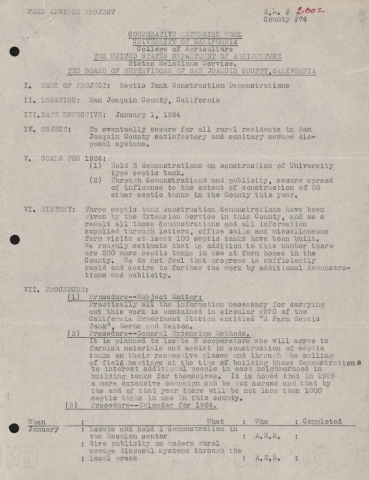
Septic tank construction demonstration, circa 1928

University of California Agricultural Cooperative Extension, San Joaquin County, Collection

UC Merced, UC Cooperative Extension Archive


Another document from 1925 details outreach efforts for Cooperative Extension demonstrations on the construction of septic tanks:

Septic tank construction demonstration, circa 1928

University of California Agricultural Cooperative Extension, San Joaquin County, Collection

UC Merced, UC Cooperative Extension Archive


Two other archival documents portray the blueprints for construction as well as the actual demonstrations:

Septic tank construction demonstration, circa 1926

University of California Agricultural Cooperative Extension, San Joaquin County, Collection

UC Merced, UC Cooperative Extension Archive
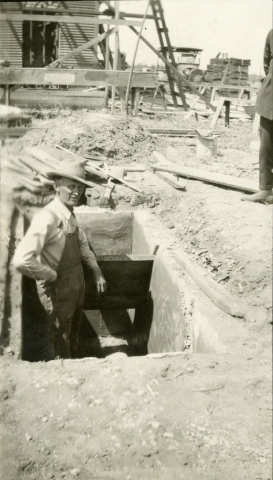
 

Septic tank demonstration, Grant Farrar, Escalon, 1921

University of California Agricultural Cooperative Extension, San Joaquin County, Collection

UC Merced, UC Cooperative Extension Archive


Over the years, other difficulties emerged related to ongoing labor shortages, capable of interrupting agricultural production. Efforts to mitigate the lack of workers is evident in the collection. A project plan from 1918, confirms a need to “assist the College of Agriculture in carrying on its war emergency work so far as it concerns the farm labor needs and supplies during the 1918 crop season.”
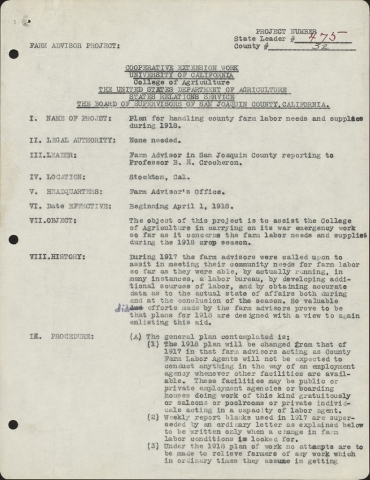
Plans for handling county farm labor needs and supplies during 1918, 1918

University of California Agricultural Cooperative Extension, San Joaquin County, Collection

UC Merced, UC Cooperative Extension Archive


The document stipulates that supplies and workers, located by the county’s labor agent, will be dispersed to farms experiencing shortages. High school boys and women, however, will not be given placements, as the document notes that UC Cooperative Extension agents expected their participation in civic duties elsewhere.

During World War II, labor shortages occurred again due to the draft. The Bracero Program began in 1942 after the United States and Mexico signed the Mexican Farm Labor Agreement which allowed agricultural workers from Mexico to temporarily live and work in United States. The first instances of this program occurred in San Joaquin County and in the collection are images of farm workers from Mexico, as well as this photograph depicting a mobile farm labor camp in 1943.
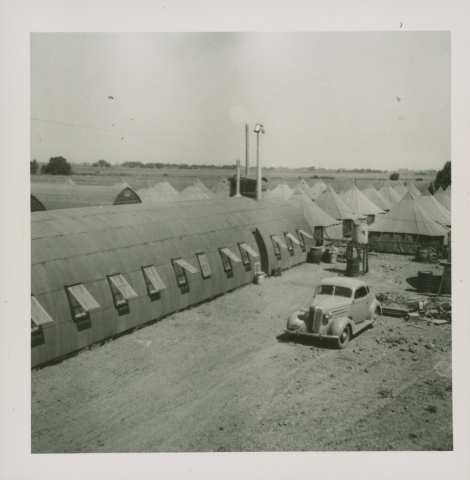
Mobile farm labor camp near Manteca, California, for housing Mexican national farm workers, 1943

University of California Agricultural Cooperative Extension, San Joaquin County, Collection

UC Merced, UC Cooperative Extension Archive


A final example of a UC Cooperative Extension program designed to alleviate hardship is the effort to combat food shortages through WWII emergency food production initiatives. As the following document indicates, even children were encouraged to participate. In the 4-H youth development program, participants documented their contributions in their California Boys’ and Girls’ 4-H Clubs War-Time Records Books.
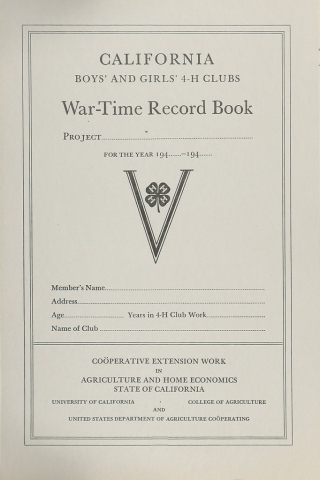
Emergency food production, 1943

University of California Agricultural Cooperative Extension, San Joaquin County, Collection

UC Merced, UC Cooperative Extension Archive


Youth participants were encouraged to track by the pound food they produced for the Food for Freedom program. Additional information tallied included the number of scraps (rubber, metal, paper, burlap) collected and other accomplishments like the purchasing of war bonds, airplane spotting, clothing conservation and first aid training. A full list of activities is viewable in the document below.

Emergency food production, 1943

University of California Agricultural Cooperative Extension, San Joaquin County, Collection

UC Merced, UC Cooperative Extension Archive


To learn more about UC Cooperative Extension’s endeavors at solving local and national problems, please visit Calisphere to see the entire University of California Agricultural Cooperative Extension, San Joaquin County, Collection online!



Krista Walsh & Crystal Fontes Join Library Staff

Wed, July 13, 2022 2:05 PM

Krista Walsh and Crystal Fontes Join Library Staff 

Our Library's administrative team welcomed two career staff this spring: Krista Walsh and Crystal Fontes. Krista Walsh is our Library Administrative Coordinator. She is a proud Bobcat alumnus who worked in the Library's administrative services as a library student assistant. This experience -- coupled with interests in higher education and a financial
career -- made this position appealing. A couple of her key responsibilities include student recruitment & retention and invoice processing. She enjoys working with all her colleagues, fielding questions from those in any library unit. 
 
Crystal Fontes is the Executive Assistant to the University Librarian (UL) and joined the UC Merced Police Department where she served almost 14 years. She supported the Chief of Police and managed programmatic responsibilities like property registration. Crystal brings her rich administrative experience to our library staff and is enjoying the breadth of the library's projects. She has already been involved in event planning, coordinating for the Council of University Librarian's (CoUL) two-day visit, and assisting her colleagues with financials. 
 
Krista and Crystal have joined our Chief Administrative Officer, Stephanie Peterson and Library Business Officer, Mekenna Hagerman to create a strong and responsive administrative team that support SO many library activities. We all benefit from their care and competency. 
 
Welcome Krista and Crystal to the UC Merced Library. We have already been the benefactors of your strong customer service values!
 
 
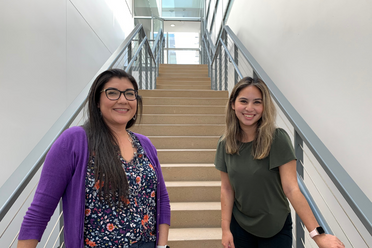
Crystal Fontes, Executive Assistant to the University Librarian
Krista Walsh, Library Administrative Coordinator

Access Alert - OCLC

Fri, July 8, 2022 11:50 AM

Beginning Saturday, July 9th at 11pm through Sunday, July 10th at 3am Pacific Time, OCLC will be performing systems maintenance which may cause sporadic interruptions and delayed response times for online catalog services. We apologize for any inconvenience and hope this interruption will create minimal disruption to our users’ research. 

Deputy University Librarian Donald Barclay Retires

Thu, June 30, 2022 8:15 AM

Deputy University Librarian Donald Barclay retires June 30th after 20 years at UC Merced and over 30 years as an academic librarian.

Barclay started at UC Merced in 2002 as the Assistant University Librarian and was one of the first seventy-five university hires. The opportunity to build a new UC campus and return to California motivated him to apply for the position while working at the Texas Medical Center. Though Barclay had held academic librarian positions at New Mexico State University and the University of Houston, he had familiarity with the UC system having completed masters’ degrees in both English and Library and Information Science from the University of California, Berkeley. During his time at UCB, he also worked at the Bancroft Library honing his cataloging skills.

Prior to the campus opening, Barclay had office space at the deactivated Castle Air Force Base, along with other UC Merced employees. In those early days, he especially enjoyed envisioning a 21st century academic library, creating “something from nothing”. According to Barclay, this start-up phase “was a blast” that provided lots of room for creativity. The transition to building and mentoring a highly-skilled and motivated library staff team continued to be interesting and important work. Memorable events included the shovel-ready dedication of the campus on October 27, 2002, a tense and careful installation of the Amri glass donor recognition -- a valuable piece of carved crystal art -- hung in the McFadden Willis Reading Room to inspire future students (2005), and the Dear Michelle campaign that brought First Lady Michelle Obama to campus as the 2009 commencement speaker. 

With founding University Librarian R. Bruce Miller, Barclay invented the blueprint of the 21st century academic library which anticipated a more digitally-oriented library without reliance on print journals or separate reference collections. This drafting of a new academic library did not require perfection but rather risk-taking. Barclay notes that even planning a cafe in an academic library was considered unusual 20 years ago, and to our knowledge, we were the first to do it. A library school student at the time interviewed Barclay about the inclusion of a cafe because it seemed “so out there.” Barclay makes an analogy that the UC Merced Library could be compared to the Oakland A’s in the film Moneyball where they (and we) had to compete in a different way. “The big market teams figured out what they were doing and started doing it as well. What people thought was weird and outrageous has now become commonplace.”

Barclay brought a breadth of experience to UC Merced that served him well in a small start-up library environment with experience in archives, public services, technology, cataloging, systems, scholarly publishing, and data. Though Barclay had a rich librarian career before arriving at UC Merced, he felt like he made his mark on librarianship here. While hired initially as Assistant University Librarian for Public Services, he was promoted to Associate University Librarian and made Deputy University Librarian in 2008. He served as Interim University Librarian for four years following Miller’s retirement in 2011, and later returned to his role as Deputy University Librarian.

As part of his work, Barclay made significant contributions to UC Libraries for both local and systemwide benefits. As there were limited numbers of UC Merced Library staff early on, Barclay served on multiple UC Libraries’ committees including the Library Technology Advisory Group (LTAG), Heads of Public Service (HOPS), and the Systemwide Operations & Planning Advisory Group (SOPAG).

Barclay was a visionary who often advocated for services, tools, or principles long before there was broad support or deep interest across the UC Libraries. He was an early champion for shared digital reference service, a systemwide integrated library system, video conferencing for meetings, and open access publishing. In addition, he often brought a much needed public services perspective to conversations around library projects and priorities.

During his time on the Council of University Librarians (CoUL) he contributed to an assessment of staffing, envisioned the possibility of shared services, and worked with colleagues to propose a new framework for the UC Libraries’ advisory structure. Immediately after his CoUL service, Barclay served as CoUL’s planning lead which involved orchestrating the first meeting of the University Librarians (ULs) with then UC president Janet Napolitano. This set a precedent for ongoing annual meetings with UC UL’s and UC Presidential leadership. Recently, he chaired the Direction & Oversight Committee (DOC) which created a governance structure for the newly launched Systemwide Integration Library System (SILS).

While contributing to these high-level groups, Barclay has possessed a willingness to stay connected to the daily operations of the library, whether by launching the library’s first catalog, teaching classes about copyright, or meeting with students about their reference questions. Due to his amazing memory for random facts and an acute knowledge of the information landscape, Barclay is someone you want to confer with on any wicked reference question.

Colleagues have appreciated his willingness to share expertise and admired his ability to stay abreast of so many topics applicable to academic libraries. He anticipates that most will remember his sense of humor and fun but hopes that colleagues will remember his work to build the UC Merced Library. 

During his retirement, Barclay anticipates writing more. He has authored numerous articles, book chapters and more than ten books over the course of his career on topics ranging from the literature of the American West, to children’s literature, to library and information science. His most recent book Disinformation: The Nature of Facts and Lies in the Post-Truth Era came out in April 2022 as a follow-up to Fake News, Propaganda, and Plain Old Lies: How to Find Trustworthy Information in the Digital Age (2018); it spent two months as an Amazon #1 New Release. To follow his regular blog posts, visit his website Information, Please! http://donaldbarclay.com/

In addition to writing, he plans on remaining active in the University Friends Circle and continuing to serve as a Merced County Library Commissioner. He is also Vice President of the Friends of Merced County Library and will become President shortly after his retirement. He says, “I will definitely stay busy and keep my hand in the university and community.”

Thanks Donald for your many contributions to the UC Merced Library, UC Libraries, the campus, and our community. Congratulations on your retirement!

Donald Barclay


Pages

Subscribe to Library News