
Skip to content Skip to navigation

Library News

Highlights for National Dairy Month

Fri, June 17, 2022 12:00 AM

June has been celebrated as National Dairy Month since 1937 to promote drinking milk and to stabilize the dairy demand when production was at a surplus.

California's dairy reign began in the 1850s north of San Francisco, where the Point Reyes region joined New York state as the two centers of commercial dairy production in the country. In 1880, the California census counted 210,000 milk cows producing nearly 12 million gallons of milk.

Food safety and quality have been priorities in the dairy industry for more than 100 years. In 1891, the Dairymen’s Union of California was founded to improve distribution both inside and outside the state, and to set quality standards and benchmark prices. The Dairymen’s Union created the State Dairy Bureau, which promoted dairy research and education at the state's agricultural colleges and inspected dairy operations to verify that they met state health standards. The partnership and cooperation between dairy farmers and the government helped California's dairy industry become an economic success.

A search for "dairy" in UC Merced Library's California Agricultural Resources Archive (CARA) yields nearly 400 digitized resources documenting the state's history of research and development in the dairy industry. Annual narrative reports of county agents, milk flavor and production cost surveys, cow census records, and dairy industry newsletters provide a picture of how California's dairy boom came to be.

In 1922, tester G. Wolf of the Farm Bureau Dairy Department of San Joaquin County reported 472 cows tested, 39 of which produced over 400 pounds fat and made the state honor roll of butter fat production. These highs spotlighted the value of dairy animals and the efficiency of herds through improved knowledge and record-keeping of the milk and butter they produced.

Row of cows, circa 1920. Merced County UC Cooperative Extension Records.

In Merced County, the number of milk cows numbered 96,000 in 1946. Modern equipment made for more efficiency and larger herds, while improved breeding, feeding, and management upped production per cow.

 "The Dairy Picture." Agricultural Resources and Trends in Merced County: Annual Report 1958.
"The Dairy Picture." Agricultural Resources and Trends in Merced County: Annual Report 1958. 

Dairy Tales, published by UC Agricultural Extension’s Dr. John W. Seibert in 1983, presents a county-by-county statistical picture of the dairy industry, and a window into milk's starring role in California agriculture. That year, California dairy farmers earned $1,885,472,000 from the sale of milk, and the average dairy farm sold 14,202 lbs. of milk per day—producing enough milk in one day to meet all the dairy product needs of a family of four for over six years. A decade later, California became the leading dairy-producing state in the nation.

In 2020, the value of milk produced in Merced County alone totaled $1,050,940,000 (Source: California County Ag Commissioner's Data Listing).

Row of cows, circa 1920. Merced County UC Cooperative Extension Records. 
Group with prize-winning cow, circa 1963. Merced County UC Cooperative Extension Records.
New Awards for Regional Archives at UC Merced Library

Sat, May 14, 2022 12:00 AM
Author: 

In October 2021, the National Endowment for the Humanities (NEH) awarded UC Merced Library a grant from American Rescue Plan funds to support the California Agricultural Resources Archive (CARA) project.

While California’s Central Valley is one of the most productive agricultural regions on the globe, the historical records of the rural center of California are under-represented in the American register. The documents, maps, and photographs preserved in CARA include valuable information on local land development, crop research, and changing agricultural practices. They also shed light on rural domestic life and civic engagement through the organization of Farm Bureaus, agricultural associations, and 4-H.

The one-year grant has funded the retention of four positions: an archivist, two undergraduate student assistants, and a graduate student specialist. In addition to allowing the library to continue processing collections, this federal support enables the library to continue its outreach and engagement efforts despite the financial impact of the coronavirus pandemic and a significantly curtailed budget.

In partnership with Merced County 4-H, the library is conducting a “History Detectives” Summer Science Academy for students in grades 8-12 this coming July. Students will learn how to conduct hands-on research in the archives and use tools to curate information for an exhibit on agricultural history in Merced. They will have the opportunity to learn techniques that the typical student is not exposed to until college or beyond. 

UC Merced Library is taking a place-based approach to developing special research collections that will support the highest levels of educational opportunity for Valley residents. Recognition of the importance of these efforts has resulted in even more substantial support. In April, the NEH announced it would award a $750,000 Infrastructure and Capacity Building Challenge Grant to UC Merced to fund a renovation project in the library.

The Library, in partnership with UC Merced’s Center for the Humanities, will expand its capacity to house archives and special collections documenting the Sierra Nevada and Central Valley regions. The capital project will create secure storage space as well as spaces where researchers, students, and community members can engage with the collections. The project is expected to be completed in two years and will house over 100,000 items.

For more on the Sierra Nevada-Central Valley Research Archive: https://ucm.edu/TzrUEg

To register for the History Detectives Summer Science Academy: https://surveys.ucanr.edu/survey.cfm?surveynumber=37158

2021-2022 Carter Joseph Abrescy and Larry Kranich Library Award for Student Research Excellence Awardees Announced

Mon, May 16, 2022 2:40 PM

Author: Olivia Olivares, Instruction & Outreach Librarian / Chair, Abrescy-Kranich Library Award Committee

Published: May 16, 2022 

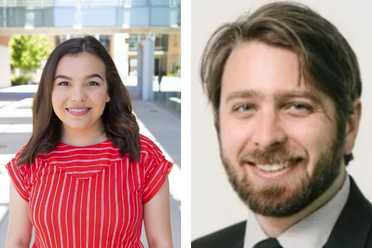
Since 2017, the UC Merced Library has offered an award to undergraduate students who demonstrate excellence in library research and use. This year, the Carter Joseph Abrescy and Larry Kranich Library Award for Student Research Excellence was awarded to Brandon Cooper, Class of 2022, and Madelyn Lara, Class of 2022.

Madelyn Lara is a senior from Bakersfield, CA, majoring in History. She graduated from UC Merced this spring. Ms Lara’s winning submission is titled, “Direct Action and Unionization: How the September 19th Garment Workers Union Created a Women’s Movement,” and was written as part of Prof Sabrina Smith’s course, Women and Gender in Latin America. Ms. Lara’s research focuses on the international women’s labor movement, and her essay examines the history of the women’s labor movement in Mexico City. Ms. Lara has dedicated her award to “the women of the National Garment Workers Union for the immeasurable work they did in securing better lives for women everywhere.

Brandon Cooper is a senior, majoring in Literature with a concentration in Romanticism. He graduated from UC Merced this spring. His winning submission, “The Laughter of the Madman: Sudden Enlightenment and Yeatsian Happiness,” was written for Proffessor Matthew Kaiser’s course, “Cultural History of Comedy since 1900.” Professor Kaiser also is Mr. Cooper’s advisor in the UCM English Honors program. Mr. Cooper is “eternally grateful for all the help, direction, and inspiration that he has received from UC Merced and the English Department – especially from Professor Kaiser – and looks forward to where his path leads!”

The Abrescy-Kranich Library Award was established to recognize and reward excellence in undergraduate research at UC Merced. Award applicants must show effective use of library and information resources, and demonstrate a thorough understanding of the research process and good research practices. Award recipients are selected by a committee of librarians and faculty.

The UCM Library heartily congratulates Madelyn and Brandon on their achievements. We thank them for participating in this year’s award application process, and we wish them the best in their post-UCM careers.


Access Alert - BioOne

Thu, May 12, 2022 4:00 PM

On Monday, May 16th from 6pm to 8pm Pacific Time, the BioOne Complete platform will undergo scheduled maintenance. During this time, content and services on BioOne may be intermittently unavailable. We apologize for any inconvenience and hope this interruption will create minimal disruption to our users’ research.

Summer Library Hours

Mon, May 9, 2022 8:20 AM

Summer 2022 Library Hours 

Summer 2022 Library Hours

Intersession #1 Hours: Monday, May 16, 2022 - Friday, May 20, 2022
Monday - Friday: 8 am - 4pm 
Closed Weekends 
 
Summer Hours: May 23, 2022 - August 12, 2022
Monday - Thursday: 7 am - 10 pm
Friday: 7 am - 6pm 
Closed Weekends 
 
Intersession #2 Hours: Monday, August 15, 2022 - Tuesday, August 23, 2022
Monday - Friday: 8 am - 4pm 
Closed Weekends 


NEH Grant Awarded to UC Merced for Sierra Nevada-Central Valley Archive in Library

Tue, May 3, 2022 4:40 PM

The National Endowment for the Humanities (NEH) has awarded the UC Merced Library in partnership with the Center for the Humanities a $750,000 Infrastructure & Capacity Building Challenge Grant. This grant is the largest that UC Merced has received from the NEH, and we were awarded the maximum amount. The funding for this capital project will establish a research archives with secure storage to house priceless archival collections and spaces where researchers, students, and the community can engage with those collections. The UC Merced Library has focused on acquiring primary sources that capture the cultural, social, and environmental history of the Sierra Nevada and Central Valley, and this grant will grow our capacity to continue this important work.

We would like to thank Chancellor Juan Sánchez Muñoz, Executive Vice Chancellor and Provost Gregg Camfield, Presidential Chair in the Humanities & Literature Professor Ignacio López-Calvo, and many others for their support!

Read the full press release for more details about Sierra Nevada-Central Valley Archive, the value of regional collections, and the project timeline.

Image of archival collections

Access Alert - Alma Primo

Tue, May 3, 2022 10:45 AM

On Sunday, May 8th from midnight to 1am Pacific Time, ExLibris will be performing systems maintenance which may cause an interruption in online catalog services. We apologize for any inconvenience and hope this interruption will create minimal disruption to our users’ research.

Library Collaborative Work Rooms Receive Upgrades and Will Reopen After Year-Long Closure

Thu, April 21, 2022 12:50 PM

When the Library building opened in 2005, the Collaborative Work Rooms located on the 2nd and 3rd floors became popular spots for studying, meetings, academic activities, and group assignments. The quiet and tech-equipped rooms have been offline for the past year, receiving much needed equipment and furniture upgrades, as well as a design facelift. We are excited to announce that the Collaborative Work Rooms will be available for reservation in the EMS Room Reservation System once more. They are scheduled to reopen on April 25, 2022.

Upgraded features include:

  • New tables in a fixed configuration, with seating for six people 
  • Tabletops with wall display connection, plus USB-A, USB-C, and AC power connections 
  • 55” flat panel wall-mounted displays
  • Glass whiteboards with additional space to increase collaboration and productivity
  • Fresh paint to reduce glare 

Visit our Collaborative Work Rooms page for more information including maps, equipment lists, and reservation instructions. 

Upgraded Collaborative Workrooms
Photo Credit: Ross Anastos

Cooperative Extension Firsts in Modoc County

Thu, April 7, 2022 3:15 PM

Additional material from the Modoc County, UC Cooperative Extension Records, part of the UC Cooperative Extension Archive at UC Merced, have been digitized and made available on Calisphere. Found in the collection are copies of Modoc County Ranch Roundup, a newsletter dedicated to Cooperative Extension activities in the region, including this issue from 1957. 

Modoc County Ranch Roundup, 1957 

Two articles publicize some exciting “firsts” for the county. A piece called “The Green and White Score Another First” describes the establishment of a new demonstration program for 4-H participants in Modoc County and the Tulelake Basin region. In its capacity as a youth development program, 4-H delivers an assortment of activities from livestock management, home economic activities, dress revues, summer camps and much more. Participants are encouraged to perform demonstrations which, as the article states, is “the simple procedure of showing someone else how to do a job and explaining it as the work is done.”  

Examples of 4-H demonstrations are depicted in several photographs in the UC Cooperative Extension Archive collection from Merced County. 

Girl with sewing machine, ca. 1958


Two boys give a presentation on a rifle, ca. 1968

When describing the purpose and value of 4-H demonstrations, the article’s author states that, “demonstrations have a two-fold purpose in teaching recommended practices and helping boys and girls to think clearly, to work skillfully and to talk confidently when addressing an audience.” More activities of 4-H work in Modoc County are viewable in the digitized Annual Reports, in both statistical and narrative formats, available in our online collection. 

On the next page, an article entitled, “Modoc Milk Via 2,500 Gallon Tanker Brings New Agriculture Milestone to Modoc Co.” enthusiastically announces the introduction of a large, refrigerated truck to carry milk long distances. 

While the old method of transporting milk required back-bending labor, the new truck’s tank carries 2,500-gallons and “is so well insulated that at a 100 degree outside temperature, the milk will raise only four degrees in sixty hours.” This development was a major improvement to milk production and was much celebrated by Cooperative Extension staff working with dairy farmers during that the time. 

Check out other issues of Modoc County Ranch Roundup and the rest of the digitized Modoc County, UC Cooperative Extension Records!

Pages

Subscribe to Library News