Skip to content Skip to navigation

Library News

Access Alert - Course Resources

Thu, December 10, 2020 5:35 PM

On Friday, December 18th from 6pm to 9pm Pacific Time, the Course Resources tool in CatCourses will be unavailable due to systems maintenance. We apologize for any inconvenience and hope this interruption will create minimal disruption to our users’ research.

Call for Spring 2021 Library Instruction Requests

Thu, December 10, 2020 2:40 PM

UC Merced librarians offer instruction sessions to support students in their completion of course assignments requiring library research skills. During this time of remote instruction, we are able to visit your Zoom sessions to offer instruction.

Please submit any spring 2021 requests via our online instruction request form. Requests for asynchronous instruction materials, such a recording or tutorial, can also be made using the same form. Requests received by Tuesday, January 19th will receive first scheduling priority.

Direct any questions to Sara Davidson Squibb (209-205-8237) or your library liaison. We are happy to consult prior to your instruction request.

Visit our Library Instruction Services landing page for more information including suggested syllabus language, research guides, and information literacy outcomes. We look forward to working with you to increase students’ ability to strategically navigate, critically evaluate, and ethically use information.

Research & Learning Services, UC Merced Library

Library Instruction Requests graphic

Library Services During Winter Break (2020-2021)

Thu, December 10, 2020 10:15 AM
Reference Services
Reference appointments are available through December 24th and will resume Monday, January 4th. 24/7 Chat will continue to be available during Winter Break. Any email inquiries or chat follow-ups received during the Winter Break, will receive a response in the New Year.
 
Accessing Resources
The Library will be able to deliver items and process requests through December 18th. At that point, we will pause these services until January 4th. Requests that come in close to December 18th may not be processed until the New Year. If you have any requests or questions about these services, please let us know before the Winter Break.
 
GIS Support Provided by SpARC
Software support and consultations will be available through December 24th and will resume Monday, January 4th. Information about GIS resources, training, and licensing can be found at https://ucmerced.maps.arcgis.com/.
 
Course Resources
Spring 2021 Course Resources requests can be submitted during the Winter Break closure. Any requests received during the Winter Break closure will be processed in the New Year. Users are encouraged to submit their Spring 2021 requests before Friday, December 18th. Information about the Course Resources service and how to submit requests can be found at http://library.ucmerced.edu/research/instructors/courseresources.


The Carter Joseph Abrescy and Larry Kranich Library Award for Student Research Excellence is Now Open for Undergraduate Applicants

Thu, December 3, 2020 12:55 PM

Applications are now being accepted for the Carter Joseph Abrescy and Larry Kranich Library Award for Student Research Excellence. Undergraduate students who meet the criteria are invited to submit applications prior to the deadline on January 25, 2021 to be considered. 

The Carter Joseph Abrescy and Larry Kranich Library Award for Student Research Excellence was established in 2017 to recognize outstanding undergraduate research at UC Merced. The award recognizes students who demonstrate effective use of library and information resources, as well as an understanding of the research process and growth in research practices. A committee of faculty and librarians will review applications and select awardees. A total of $1,000 will be awarded each year; no more than two awards of $500 each will be awarded in a given year

To view eligibility, submission requirements, and to submit your application visit the Library Award page

If you have questions about the award please email libraryaward@ucmerced.edu.

A Look Back: The Farm Bureau Organization 100 Years Ago

Fri, November 20, 2020 5:45 PM
Author: 

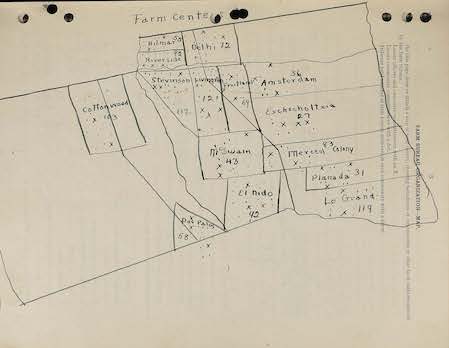
“Merced County was what might be termed virgin territory for rural organization work before the farm bureau came into this county,” wrote County Agent J.F. Grass in his November 30, 1920 Narrative Report. But Grass reported that with a few “good men” of experience placed in office who were “willing workers,” and with ongoing attention to “developing individuals” to be “trained to act as leaders,” “the program of work idea is working out satisfactorily in this county.” As of December 1st of that year, the Farm Bureau of Merced County had fifteen farm centers and 1,075 members.

Map of farm centers in the county, from the 1920 annual report of the county agricultural agent. 

Map of farm centers in the county, from the 1920 annual report of the county agricultural agent.

Three years after the start of the county farm bureau, the 1920 annual report strikes a reflective tone, and Grass takes stock of the factors that are important to the progress of work: the importance of “efficient local leadership,” and of addressing the needs of local conditions, which were found to be diverse across the county. Near the end of the report, he captures an interesting snapshot in time of what he sees as the needs and prospects of those fifteen centers—starting with Amsterdam and ending with Stevinson—based on their population, attitudes, and the physical conditions of the land. Of one center he writes, “moving population and sparsely settled, poor soil to the greatest extant, lack of unity among the settlers.” Of another, a “good center, a group of people in this center who always want to change the existing order of things… always making resolutions.”

To those interested not only in the history of agriculture, but also of civic organization and community development in this county, these and other historic reports from a century ago give firsthand perspective. The 1920 report includes discussion of the Merced and West Joaquin irrigation districts recently formed, the founding of the Merced County Purebred Livestock Breeders Association, and the development of the Farm Bureau Exchange, as well as photographs illustrating farm demonstrations, agricultural clubs, and other work conducted in the county. Now, anyone with an internet connection can freely view and download these historic materials through UC Merced Library and the California Digital Library on Calisphere.

In 2018, the National Archives awarded UC Merced Library a Major Initiatives grant to preserve and digitize these and other records of California’s Cooperative Extension (UCCE) county offices. The award recognized that the Cooperative Extension records represent “documentary heritage essential to understanding our democracy, history, and culture.” Merced County’s UCCE records are among the first the library archived, under an agreement between the campus and UC Agriculture and Natural Resources. Over the course of the three-year grant, collections from fourteen California counties have been archived and are being digitized. They are core to the California Agricultural Resources Archive (cara.ucmerced.edu), an effort the library is undertaking to aggregate and provide digital access to a host of historical research material on California agriculture online.

Access Alert - OCLC

Tue, November 17, 2020 1:15 PM

Beginning Saturday, November 21st at 11pm through Sunday, November 22nd at 2:30am Pacific Time, OCLC will be performing systems maintenance which may cause sporadic interruptions and delayed response times for online catalog services. We apologize for any inconvenience and hope this interruption will create minimal disruption to our users’ research.

Ernest Lowe Photography Collection -- Live on Calisphere

Mon, November 9, 2020 9:45 AM

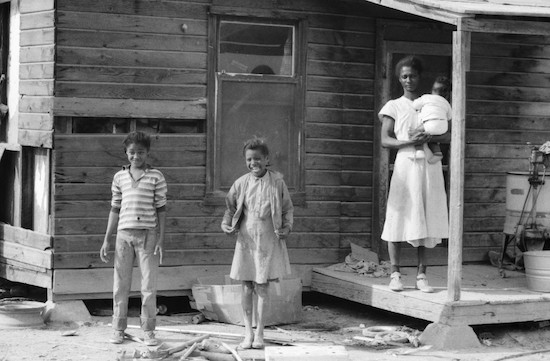
The UC Merced Library is happy to announce the public launch of the Ernest Lowe Photography Collection. This collection of photographs, which was acquired by the Library with support from the UC Merced Office of the Chancellor, showcases the work done by photographer Ernest Lowe to document the lives and struggles of the farmworking communities in California's Central Valley. 

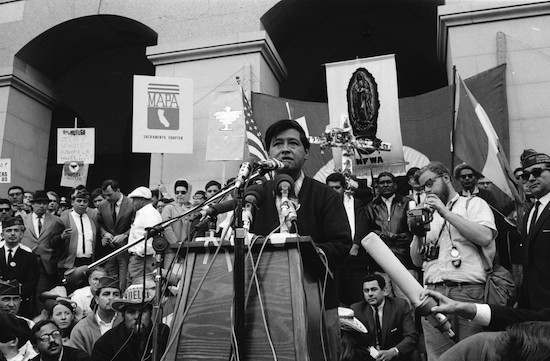
These photographs date from the late 1960s, which featured a series of flashpoints of labor activism among farmworkers in the Valley. Featured among these photographs are images from the Delano to Sacramento March, organized by the UFW, and where labor activists Cesar Chavez and  Dolores Huerta figured prominently. Too, are images of Bobby Kennedy as he participated in a series of congressional hearings on the rights on farmworkers in Delano, CA.

Alongside these more dramatic scenes are images depicting the familial and community lives of these farmworkers. As viewers, we are drawn into the worlds these laborers built for themselves as they worked tirelessly in the fields, or struggled with the disappearance of jobs as a result of the mechanization of agriculture. We are drawn into communities like Teviston, where Black sharecroppers migrated to after the Second World War. These former sharecroppers came to California looking to escape the oppression of the Jim Crow South and the new-slavery tenant farming systems, but instead found themselves struggling to find work and dealing, once again, with a racism they had hoped to escape.

Ernest Lowe studied photography in the late 50's with the noted social documentarian, John Collier Jr. His other models were the classic images of Dorothea Lange, Walker Evans, and other Farm Security Administration photographers. In 1959 Lowe joined the staff of Pacifica radio station KPFA and almost immediately began documenting the lives of migrant farm workers. 

This rich collection features more than 2,700 digital images, with approximately 5,000 additional film negatives. The digital images are newly available on Calisphere for free public viewing.


Read the full UC Merced Newsroom story here: Library Acquires Ernest Lowe Photography Collection Documenting 1960s Rural California Communities

View the collection online.

Pilot Program- The Lantern Will Temporarily Open to Students as a Study Space

Fri, November 6, 2020 8:55 AM

Beginning Monday, November 9th, the first floor of the Library Lantern will open for study space for students Monday through Friday between the hours of 10am and 4pm. This will be a pilot program and will end on Tuesday, November 24th to coincide with the campus decision for all courses to be fully remote after Thanksgiving break. The interim campus policy for Physical Mitigation and Reduction of the Transmission of COVID-19 will be enforced in this space and the maximum occupancy is 35 people. CatCards will be scanned upon entry for contact tracing. The rest of the Library is still closed, however, Curbside Pick-up and Residential Delivery are still available to patrons. 


Processing Obsolete Media in CARA

Tue, October 27, 2020 3:50 PM

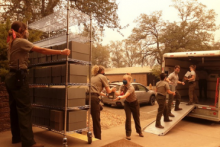
Our last post referenced items from CARA related to wildfires in California and demonstrated how archival materials from the past can inform our present conditions. This connection was underscored last month when CARA staff joined with others from the UC Merced Library and Facilities Management teams, to assist in the emergency evacuation of the archive of Sequoia and Kings Canyon National Parks (SEKI). Over the course of two days, the SEKI archive was transferred to the Leo & Dottie Kolligian Library building where the collections will remain permanently. Read With Fire Threatening, National Parks Turn to UC Merced for Help Preserving History from the University newsroom to learn more about this SEKI-UC Merced partnership, one that has deepened the relationship between the campus and surrounding lands.

With the SEKI materials safely stored for the time being, the CARA team continues to process the University of California Cooperative Extension (UCCE) collections. In recent days, we’ve turned our attention to UCCE’s significant sets of audio-visual objects. For example, the Humboldt County records contain a box of ¼-inch open reel audio tapes. In use from 1949 through the mid 1980s, open reel tapes are a type of magnetic media and were a popular and affordable option to record audio until they were widely displaced with newer media formats like 8-Tracks and cassette tapes.[1]

Box of open reel tapes
Box of open reel tapes, Humboldt County, UC Cooperative Extension Records.

The Humboldt County tapes contain only small amounts of contextual information, or metadata, both on and proximate to the tapes. What is clear, though, by reading the few labels, stickers, and annotations is that these are the tapes of former 4-H Home Advisor and County Director, Evelyn Wanderlich, recorded for a local radio station show. Not present though, are any references to themes, subject matter, and other contextual clues.

Box cover
Open reel tape box cover, Humboldt County, UC Cooperative Extension Records.

Therefore, in order to accurately know what is on them, and to both physically and intellectually position the materials within the archive, they must be listened to. Open reel tapes are placed on particular tape recorders for playback, but many institutions, such as the UC Merced Library, simply do not have such equipment on hand. The inability to listen to certain media formats on site is demonstrative of a challenge many twenty-first century institutions face. It is something that CARA contends with and so we must reach out to organizations that specialize in preserving and digitizing obsolete media. By doing so we can make these unique documentary records accessible.
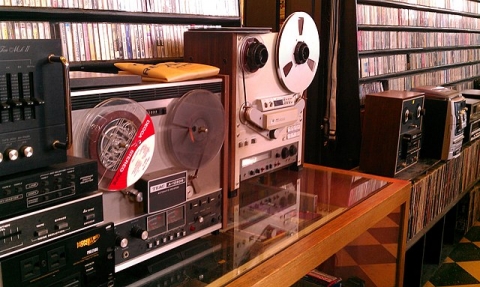
Tape recorder collection 

A tape recorder collection at Record Exchange in St Louis, Missouri. This is the type of equipment needed to listen to the open reel tapes in our Humboldt County UCCE records.

The Bay Area Video Coalition (BAVC), located in San Francisco, has been supporting media makers and activists since 1976, an era in media history that was revolutionary due to the innovation of the widely available battery-powered videotape recorders. Creating audio-visual material became less prohibitive and independent media creation flourished.[2] They continue to serve as an important leader in the field of media production, education, and preservation. So, we reached out to Morgan Morel, Preservation Manager at BAVC, for information about their services and how they could help us with Evelyn Wanderlich’s tapes.

I started by sending Morgan an inventory of the six tapes. This helps a preservationist understand the state of the materials before agreement is made to work on a project. Below is an example of the inventory sent to BAVC:
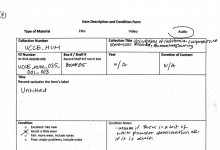
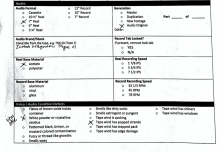
   Audio tape inventory 1Audio tape inventory 2

The brand, material types, and condition of the object are all described here. In this example, a white powdery substance was found on the tape (see image below for what we found).

Tape degradation

Morgan’s concern was that this substance was mold, creating an unfavorable condition for digitization. This picture, sent along with the inventory, helped him determine that the markings indicate deplasticization. Although no mold is present, this type of degradation can still cause trouble and will be analyzed further at BAVC facilities.

Barring any other major issues, the content of the audio tapes will be converted to master and access files and placed on a hard drive. These digital files will then become accessible to the public alongside other materials found in the Humboldt County UCCE collection. We will also place the reels in new acid-free archival boxes that will ensure the long-term preservation of the original object.


                     Clamshell box                                                                                                                                                                                         

Old housing and new housing (Gaylord Archival® Clamshell 7" Audio Reel Box).

We are excited to expand our digital collection and for the opportunity to work with the Bay Area Video Coalition. Look out for updates for when these recordings are online!


[1] https://obsoletemedia.org/open-reel-tape/

[2] https://bavc.org/sites/default/files/resource/BAVCHistory1976-2016.pdf
With Fire Threatening, National Parks Turn to UC Merced for Help Preserving History

Thu, October 22, 2020 2:35 PM

UC Merced's Newsroom reports on UC Merced Library's role in bringing the archives of Sequoia and Kings Canyon National Parks (SEKI) to campus due to fire risk. This piece speaks to the rescue effort, potential for on-going collaboration, and the rich resources located in the archive. View the full news report for more details about the park's history and highlighted archival materials from SEKI's archives curator Ward Eldredge.

SEKI archive evacuation

UC Merced Newsroom: With Fire Threatening, National Parks Turn to UC Merced for Help Preserving History (15 Oct. 2020)


Pages

Subscribe to Library News