Skip to content Skip to navigation

Library News

Controlled Burns and Fire Management Practices found in the UC Cooperative Extension Archive

Wed, August 2, 2023 6:00 PM

This summer, we are looking at ways UC Cooperative Extension has played a role in wildfire prevention and management across California. UC Merced Library’s California Agricultural Resources Archive (CARA) contains archival resources created by UCCE advisors and specialists over the last 100 years, including efforts to practice controlled burns.

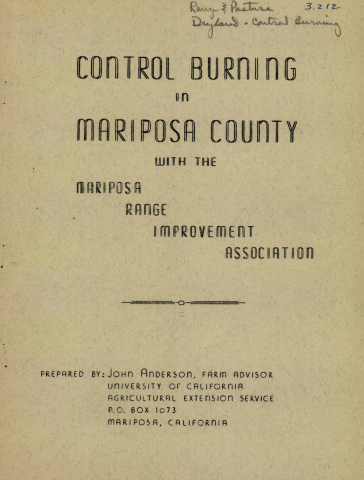
For example, found in the archive is an undated document produced by Mariposa Farm Advisor John Anderson and the Mariposa Range Management Association to inform landowners about laws, regulations, and best practices when conducting controlled burns.

Image: Control burning in Mariposa County with the Mariposa range improvement association, undated. Santa Barbara and San Luis Obispo Counties, UC Cooperative Extension Records. UC Merced, UC Cooperative Extension Archive


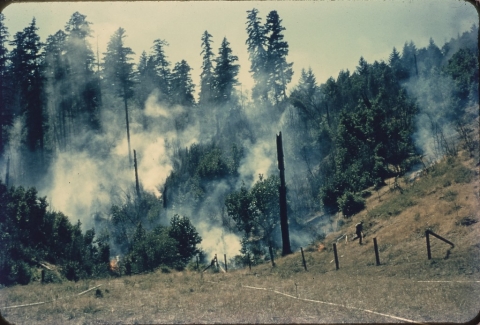
Photographs of a controlled burn on Wagner Ranch, like the image below, are found in the Humboldt County, UC Cooperative Extension Collection and have been digitized and placed online in Calisphere.

Image: Wagner burn, 1956, Humboldt County, UC Cooperative Extension Records, UC Merced, UC Cooperative Extension Archive


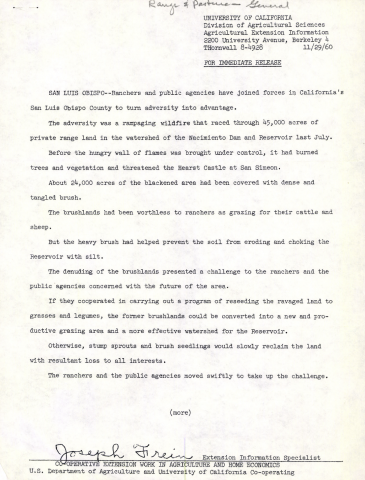
Found in the Santa Barbara-San Luis Obispo Counties, UC Cooperative Extension collection, are studies and observations of the effects of fire on the landscape. A 1960 press release from the Agricultural Extension Service, describes how a 45,000-acre rangeland wildfire on private land in San Luis Obispo County, became an opportunity for private and public parties to take advantage of the good soil underneath the burned brush. Once useless for ranchers because of overgrowth, a team reseeded the land with grasses and legumes beneficial for cattle grazing.


Image: Turning adversity into advantage, 1960. Santa Barbara and San Luis Obispo Counties, UC Cooperative Extension Records. UC Merced, UC Cooperative Extension Archive


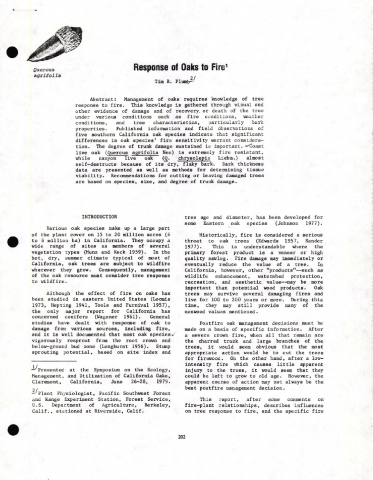
Another document describes the response of California’s imposing oak trees in fires. Importantly, the various species of Oak tree respond differently.

Image: Response of oaks to fire, undated. Santa Barbara and San Luis Obispo Counties, UC Cooperative Extension Records. UC Merced, UC Cooperative Extension Archive


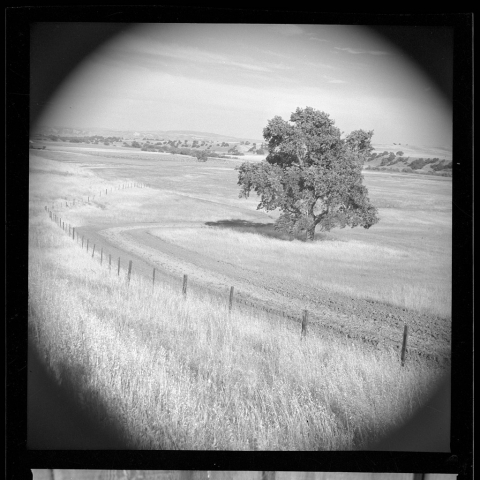
This corresponding image illustrates a fire break near a lonely Oak.

Image: Fire Break Around an Oak Tree, Santa Barbara and San Luis Obispo Counties, UC Cooperative Extension Records, UC Merced, UC Cooperative Extension Archive.


Honorable Ron W. Goode, Tribal Chairman of the North Fork Mono Tribe, has practiced controlled burning for many years and he spoke to UC last year about cultural burning as wildfire prevention. Cultural burning is important “not only because of its spiritual and cultural importance to Indigenous communities, but because the burns are designed to cultivate the biodiverse, sustainable growth that make landscapes more resilient.”

To view digitized UC Cooperative Extension collections, visit our online repository in Calisphere.

10 Years at the UC Merced Library: Samantha Fort

Fri, July 28, 2023 1:30 PM
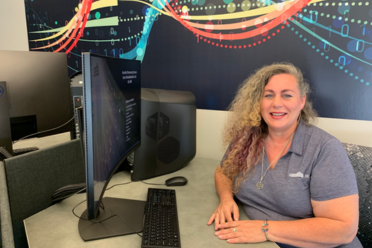
Woman with long curly hair sitting with arms folded on a desk with a computer on the desk


Samantha Fort is our Technology Services Coordinator providing excellent customer service to our staff and ensuring that the Library’s technology is working for all library visitors. We recently recognized Samantha for her 10 year anniversary at the Library. 
 
As our Technology Services Coordinator, what does a typical day look like for you in the Library?
While there is no typical day, the majority of my time is spent trouble-shooting tech issues with staff and student workstations and training student assistants to do similar work.
 
What do you enjoy most about your position in the Library?
I really enjoy the interactions with the staff. We have a great group of career and student staff. I like the fact that our technology student assistants are friendly, open to helping anybody, and willing to learn.  
 
What are you anticipating in this upcoming academic year?
We will be deploying new machines for labs on the 3rd floor west and plan to have updated public workstations available. I’m looking forward to bringing on a couple more students this fall semester for a team of four. I can’t wait to meet all the Library’s new student assistants on training day in August.
 
What professional development opportunities have been valuable to you?
Attending conferences that showcase technology has been important. This is where I hear more about up-and-coming technologies and rub shoulders with people who are also providing customer service in tech-rich environments.
 
Samantha is both known for her fabulous baking skills and her amazing costumes at Halloween.
 
What is your favorite dessert to make and the best costume you’ve ever designed? 
My favorite dessert to make is brownie pudding because of the science behind it. At the end, the brownies are on top and the pudding is on the bottom. It’s magic. However, my most requested dessert is a Baileys Cheesecake. My parents even requested this for their 50th Anniversary Party.
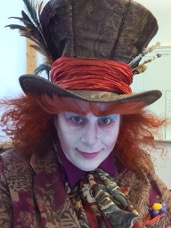
In terms of best costume, I did a pretty good Mad Hatter. 
 
Woman dressed in orange wig, white face makeup and blue eyeshadow wearing a top hat Woman dressed in orange wig, white face makeup and blue eyeshadow wearing a top hat
Photographs Courtesy of Samantha Fort
 

Congratulations Samantha on your 10 year anniversary with the Library. We all benefit from your tech expertise and strong customer service ethic!

Request Fall 2023 Library Instruction

Wed, July 26, 2023 4:25 PM

UC Merced librarians offer instruction sessions to support undergraduate and graduate students in their completion of course assignments requiring library research skills. We offer sessions in-person and online options depending on your course delivery mode.

Please submit fall 2023 requests via our online instruction request form. We appreciate receiving requests by Friday, August 25th for fall planning. We are also happy to consult prior to your instruction request regarding desired outcomes.

Visit Library Instruction Services landing page for more resources including

We look forward to working with you to increase students’ ability to strategically navigate, critically evaluate, and ethically use information.

Email us with any questions library@ucmerced.edu or contact your library liaison.

photo of person on laptop

Access Alert - IEEE Xplore

Thu, July 20, 2023 11:20 AM

On Saturday, July 22nd from 6am to 10am Pacific Time, IEEE Xplore will be performing systems maintenance which may cause an interruption in access to the database. We apologize for any inconvenience and hope this interruption will create minimal disruption to our users’ research.

Alma/Primo Reindex July 22nd at 10pm

Mon, July 17, 2023 1:20 PM
Author: 

On Saturday, July 22nd beginning at 10pm Pacific Time, ExLibris will be performing system reindexing which will cause an interruption in online catalog services through Sunday evening. We apologize for any inconvenience and hope this interruption will create minimal disruption to our users’ research.

UC Merced Library Welcomes Carol Wilson, Archivist for Regional History Collections

Sun, July 16, 2023 10:45 AM

Carol Wilson joined the UC Merced Library this July as the new Archivist for Regional History Collections, a key role that will define and develop collections, policies and programs for the Sierra Nevada and Central Valley Archive. Prior to UC Merced, Carol had a pioneering role as the first and solo archivist at the Robert Crown Law Library at Stanford University. In that role, Carol established policies and processes with the mindset of “building trust as a caretaker of records” and worked with campus partners to facilitate use of the collections.

Carol is originally from Livermore, CA and received a Bachelor of Arts degree in History from UC Santa Cruz and Master of Library & Information Science degree from San Jose State University. Carol gained experience working on a range of collections and formats at organizations that have included the Central Coast Public Radio station, the Santa Cruz History and Art Museum, and the National Archives at San Francisco. One of the most memorable experiences in Carol's career so far has been “getting to see Al Capone’s Alcatraz prison records.”

At UC Merced, many of the collections Carol will work on document the agricultural and environmental history of the region, and the impacts of human activity. Carol is eager to share an enthusiasm for archives and work with faculty and students to increase use of the collections. Amidst the flurry of moving in and new employee orientation, Carol sat down to answer a few questions:

What drew your interest to this position?

Being the Archivist for Regional History sounds amazing. There are so many avenues to explore, the possibilities are endless. I am also enthusiastic about creating a centralized repository to help facilitate access to these records.

Why is understanding the history of this region important? What role do archives play?

Archives let people access the past. They allow individuals to examine past events and provide new insights to address current day issues. Archives can facilitate attention to areas that have been historically understudied by creating a home for records.

What would you like to discover or uncover in your new role?

Part of the joy of this position is the process of discovering. I love learning about new things, talking to different people, and seeing different artifacts. While working on a new collection, I often get to do all three! I am not sure what I am going to discover when processing a collection, but I am very excited about the different possibilities.

What is your favorite thing to do on a summer afternoon?

There are too many things to name them all. It depends on the summer day; one of my favorites activities is to hike and do some drawing afterwards. If it is later in the evening, I adore making and eating s’mores.

UC Merced Library Completes UCANR Film Preservation Project

Thu, July 13, 2023 9:45 AM

This Spring, the UC Merced Library concluded its multi-year project to preserve, digitize, and make accessible films produced by University of California Agriculture and Natural Resources (UCANR). When the Library began accepting materials from UC Cooperative Extension (UCCE) offices around the state (local CEs under UCANR’s umbrella), archivists uncovered items that described and visualized the professional activities of farm advisors and home demonstration agents over the course of the twentieth century.

Formats found in the archive vary greatly (i.e.: pamphlets, newsletters, annual reports, photographs, negatives), but much of the materials fall under categories of either paper or photographic materials. So, when in 2019 the Library acquired several boxes of 16mm film reels from the UCANR statewide office, the California Agricultural Resources Archive (CARA) processing team was confronted with a new— but exciting— challenge.

Although many of the reel cans contained titles and other transcriptions, learning the exact content of each film required digitization. Even more significantly, the films were in bad shape. A strong smell of vinegar emanated from the boxes (a telltale sign of vinegar syndrome which occurs when the cellulose acetate reels decompose producing acetic acid) and many of the reels were concaved or brittle. Once vinegar syndrome begins it is irreversible and the films suffer embrittlement, shrinkage, and bubbling. If its effects go too far, it becomes impossible to play the media or complete a digital transfer.
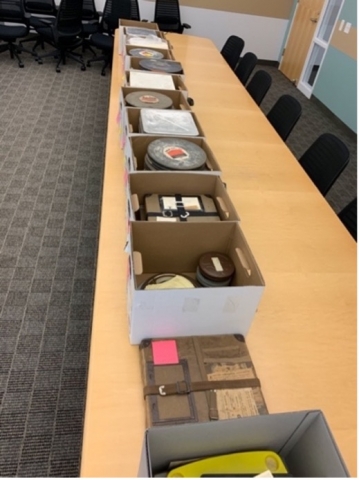
Boxes of film reels from the University of California Division of Agriculture and Natural Resources, UC Cooperative Extension Records.

Confronted with this urgency, the Library received funding from UCANR and Project CERES (a preservation grant from the United States Agricultural Information Network (USAIN)) to digitize the films. CARA’s Project Archivist spoke with Dawn Aveline, Director of Preservation Programs at Preservation Technologies, about their audiovisual laboratory MediaPreserve. Dawn conveyed that even though our materials were in various states of deterioration, they would be able to examine and likely digitize the decomposing reels.
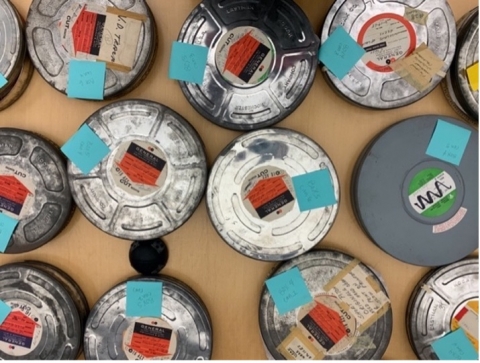
Film reels are sorted by title.
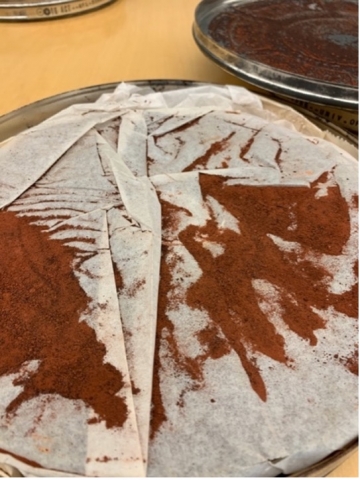
A rusty red powder from a deteriorating film can flakes off onto the object.

In total, we sent MediaPreserve eighty-seven reels for digitization and forty-nine films were identified. The reels along with their corresponding digital files were sent back to the Library. The digitized films are now available to view on Calisphere and the originals will be placed in our freezer for long term storage.

Dating from 1953 to 1979, the films, produced by UCCE personnel and collaborators, reflect UCANR activities like the 4-H youth development program, food and nutrition education, irrigation, rangeland management, the ag industry animals, and adolescent health. They reflect changes in public awareness about environmental and health concerns, and were produced as communication tools, representing valuable audiovisual documentation of those changes. For example, in the film You are what you eat, 1962, from a UCCE series called the Homemaker’s Notebook, nutritionist Marion Tate addresses the viewers about the importance of good nutrition practices for all ages. The films in the Homemaker’s Notebook series provide a historical lens for understanding the prevailing nutrition recommendations and food education practices of that time. It also reveals other societal norms of the early 1960s like clothing, interior design, and the family dynamics including the performance of gender roles.
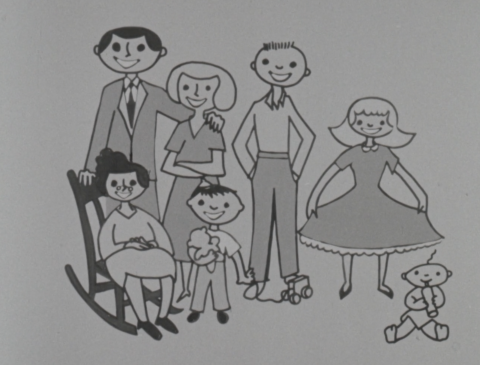
You are what you eat, 1962. University of California Division of Agriculture and Natural Resources, UC Cooperative Extension Records. UC Merced, UC Cooperative Extension Archive.

Another film titled Operation Fire Stop, visualizes a “one-year operational study to provide the Fire Services with new aids for mass-fire prevention.” (opening credits of operation film). In the film, the narrator describes several of the measures undertaken by Fire Stop collaborators such as the use of the use of grass plots for test burns, weather balloons to measure wind drifts and weather patterns, ignition pattern tests, and fire retarding chemicals. The narrator also conveys that “complete film records were made of each and every test.”
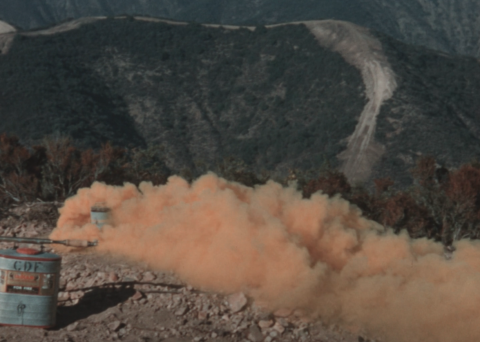
Operation Fire Stop, undated. University of California Division of Agriculture and Natural Resources, UC Cooperative Extension Records. UC Merced, UC Cooperative Extension Archive.

Modern irrigation equipment, shares clips from different irrigation equipment demonstrations to showcase modern implementations to distribute, utilize, and conserve water. The construction of canals is illustrated by the film’s visuals and discussed by the narrator; providing viewers with an understanding of how California waterways—still visible in our landscapes— were developed.
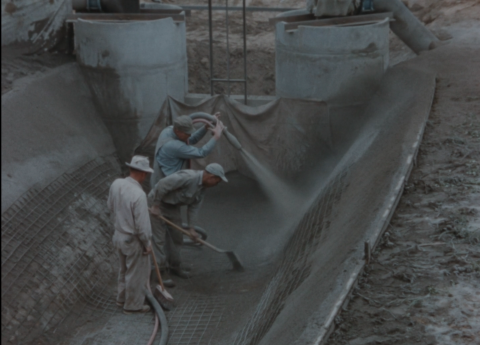
Modern irrigation equipment (color), 1964. University of California Division of Agriculture and Natural Resources, UC Cooperative Extension Records. UC Merced, UC Cooperative Extension Archive.

In September of 2022, UC Merced Library opened a photography exhibit, A Century of Impact in California's Counties: Highlights from the University of California Cooperative archive. Still shots from the digitized UCANR films made up several of the exhibit’s images, signifying the range of audiovisual materials used by UCCE to disseminate information about agriculture and rural living.
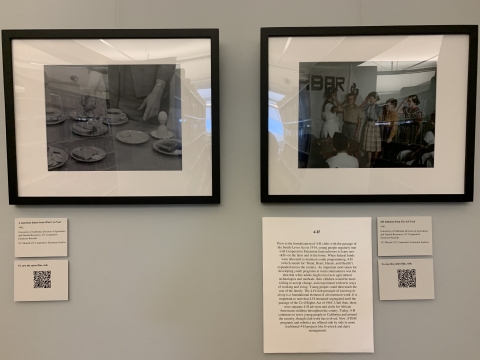
Still shots from two digitized UCANR films (What’s in food, The 4-H Trail) were part of a photography exhibit about UC Cooperative Extension curated by the Library.

In closing the exhibit, the Library hosted an event in May 2023, with local UCCE specialists, UC Merced extension specialists, and others who conduct work about agriculture, climate, and related topics. Guests learned about the Library’s endeavor to process collections from the UC Cooperative Extension archive and were presented with methods to access the materials online for research and teaching considerations.
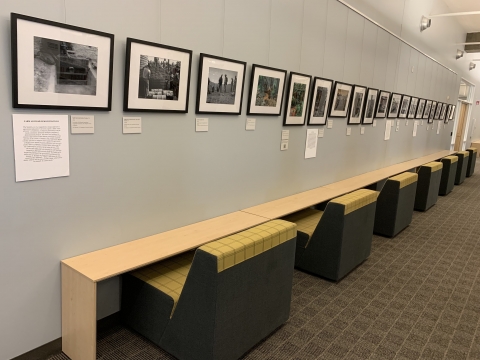
Photographs from the A Century of Impact in California's Counties: Highlights from the University of California Cooperative archive exhibit.

We look forward to more opportunities to share resources from the UC Cooperative Extension Archive!

Click here to view the entire UCANR film collection on Calisphere.
UC Merced University Librarian Haipeng Li Receives Prestigious 2023 Chinese American Librarians Association (CALA) Outstanding Library Leadership Award

Wed, July 5, 2023 4:20 PM

Headshot of Haipeng Li wearing a dark gray suite, white dress shirt, blue tie, he is wearing glasses

July 5, 2023

UC Merced University Librarian Haipeng Li was recently recognized for his outstanding contributions to the Chinese American Librarians Association (CALA) with the organization’s 2023 Outstanding Library Leadership Award. CALA’s Award Committee conferred this honor based on Haipeng’s “exceptional leadership qualities, visionary mindset, and the ability to inspire and guide others.”

Throughout his career, Haipeng has been an advocate for Chinese American Librarians Association through many initiatives and activities he has been leading or engaged in. Over 25 years ago, Haipeng joined CALA at the recommendation of a colleague he met during his participation in the Leadership and Career Development Program sponsored by the Association of Research Libraries (ARL). Established in 1973, and one of the American Libraries Association (ALA) affiliates, CALA offered opportunities to network, develop leadership skills, and participate in professional development. CALA was also a forum to support and advocate for Chinese-American librarians in North America, some of whom faced bias and prejudice at their own institutions. CALA provided a place to discuss and address these workplace concerns.

As a CALA life member, Haipeng chaired various committees before becoming the Association’s President in 2006 followed by a five-year term as Executive Director and Board member. During his presidency, he spearheaded the CALA 21st Century Librarian Seminar Series, along with other CALA leaders. This program promoted partnerships and collaboration between librarians in China, later to include Hong Kong and Taiwan, with those in the United States and Canada. A series of trips were made by CALA and ALA members to partner institutions in China where hands-on training sessions and public forums were offered on topics related to librarianship. In one single year, there were over 1,000 participants in China, and CALA membership grew 20% during a time when other library organizations in ALA were losing members during an economic downturn.  

Strong U.S./China relations at the time encouraged cultural exchange. Visits of Chinese and U.S. delegations to each other’s countries resulted in the signing of an MOU by the Minister of Culture from China and the Head of the National Endowment for the Humanities (NEH) in a formal ceremony at the Library of Congress. Three-year grant funding from the Institute of Museum and Library Services (IMLS) supported this initiative and was known as the Think Globally, Act Globally project.

The award calls attention to Haipeng’s EDI work in CALA though his commitment to equity, diversity, and inclusion which started at Oberlin where he initiated and chaired a diversity committee. The committee secured an IMLS grant to support a DEI internship focused on recruiting students from diverse backgrounds into librarianship. Oberlin was one of the first liberal arts college libraries to launch that type of internship program and was recognized for this work by the Association for College & Research Libraries (ACRL). Further funding came from the Mellon Foundation to extend this initiative to additional liberal arts colleges and Historically Black Colleges and Universities (HBCUs).

Beyond CALA, Haipeng has also co-chaired the steering committee (2012) for the Joint Conference of Librarians of Color conference. The conference held every four years is an important professional home for many librarians of color.

This is not the first time that Haipeng Li has won a CALA’s prestigious award. This latest award can be attributed to his sustained vision and extensive contributions to CALA. He is quick to note that this award is not only the result of individual effort but also has involved the dedication of talented colleagues and teamwork to envision and implement these impactful initiatives.

Congratulations!

*Link to Original PDF press release outstanding_library_leadership_-_haipeng_li_58_.pdf

Access Alert - Alma/Primo

Wed, June 28, 2023 2:20 PM

On Sunday, July 2nd from midnight to 2am Pacific Time, ExLibris will be performing systems maintenance which may cause an interruption in online catalog services. We apologize for any inconvenience and hope this interruption will create minimal disruption to our users’ research.

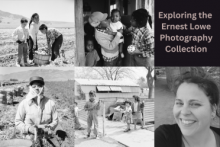
UC Merced Colleague Heather Devrick Explores Ernest Lowe Photography Collection

Fri, June 16, 2023 11:50 AM

Heather Devrick is a lecturer in the Merritt Writing Program (MWP) and a current graduate student pursuing a Master in Library and Information Science (MLIS) through San Jose State. We spoke with her recently to ask about her pursuit of an MLIS and use of the Ernest Lowe Photography collection to complete an archival assignment.

The Ernest Lowe Photography Collection features Lowe’s work documenting the lives and struggles of farm working communities in California’s Central Valley in the 1960s and captures prominent labor activists including Cesar Chavez and Dolores Huerta.

Q: What made you pursue an MLIS?  Where are you at in your program?

Though I loved books and libraries at an early age, I seriously started considering an MLIS program during the MWP/Library TRAIL (Teaching Research and Information Literacy) collaboration. In this initiative to embed information literacy into a first-year writing course, I was struck by the processes required for both writing and research. Since that time, I have been working with students to not only develop their writing skills but also find their inner researcher. Currently, I am about halfway through the MLIS program.

Q: What was your assignment and what prompted your decision to use the Ernest Lowe Photography Collection to complete it?

I was required to curate an exhibit based on an archival collection and though I was allowed to choose any digital collection for this project, I knew I wanted to select a collection that highlighted the Valley. I was aware of the UC Merced Library’s focus on creating a Sierra Nevada-Central Valley Archive, so I reached out to my library colleagues for an introduction to available collections. University Archivist Jerrold Shiroma introduced me to digitized UC Merced Library and Special Collections available through Calisphere including the Ernest Lowe Photography Collection. Jerrold also followed up by providing an article on Black farming communities in the Central Valley for additional context.

Q: What was challenging about crafting an exhibit concept?

Curating an exhibit requires that you take a lot of information and make sense of it. This approach reminded me of TRAIL where we emphasized with students that you start with a question not with an answer. My questions included, “What stories are here? What stories have been under told?”

Just like any research process, I had to find a focus and theme. Originally, I thought I might feature photographs of abandoned buildings (as there are so many of them in Lowe’s work!) but instead I decided to curate photographs of children of migrant farmworkers. I intentionally made selections that showcased children from multiple locations, participating in varied activities, (such as working, playing, attending school), and belonging to different communities.

It was perhaps most difficult to limit my choices to a mere 30 photographs! I was also challenged to place a hard-stop to my research. There is so much more in the archives waiting to be explored and discussed.

Q: What did you learn/discover through this project?

Through this project I was first introduced to Calisphere and was amazed by how much digital content was available. The Ernest Lowe Collection alone has 2,700 photographs. I learned more about Lowe’s work and discovered that the UC Berkeley School of Journalism hosted a 2013 exhibit titled Don’t Cry For Me Babey which featured Lowe’s photos of family and children laborers.

To better understand the collection, I found myself researching individuals, events, communities, and organizations. The metadata for each photograph varied, so my research involved trying to verify people and places in order to provide accurate information about each item. For many photographs, I was able to supplement the metadata.

I learned more about Black Okie communities like Teviston and the role of individuals like Maria Moreno in this region’s labor activism. For instance, she attended AFL-CIO (American Federation of Labor and Congress of Industrial Organizations) convention in Florida (1961) to argue for reinstated funding for the Agricultural Workers Organizing Committee (AWOC); she was successful. Overall, I was struck by how many people were involved in the labor movement -- both those who are well-known and others who were never in the spotlight. As featured in the photographs, children were part of this endeavor as parents took them to important farmworker labor events.

Q: What would you want others to know about archives, digital collections, or this Ernest Lowe collection based on your work?

I want people to know what we are doing at UC Merced with the establishment of a Sierra Nevada-Central Valley Archive. We are bringing together unique sources from our region and making them accessible to anyone. With these collections, we can surface stories we didn’t know were there. They speak to the Valley’s existence and importance.

 Exploring the Ernest Lowe Photography Collection

View images selected from the Ernest Lowe Photography Collection for Devrick's Curatorial Project (2:04)

Pages

Subscribe to Library News